
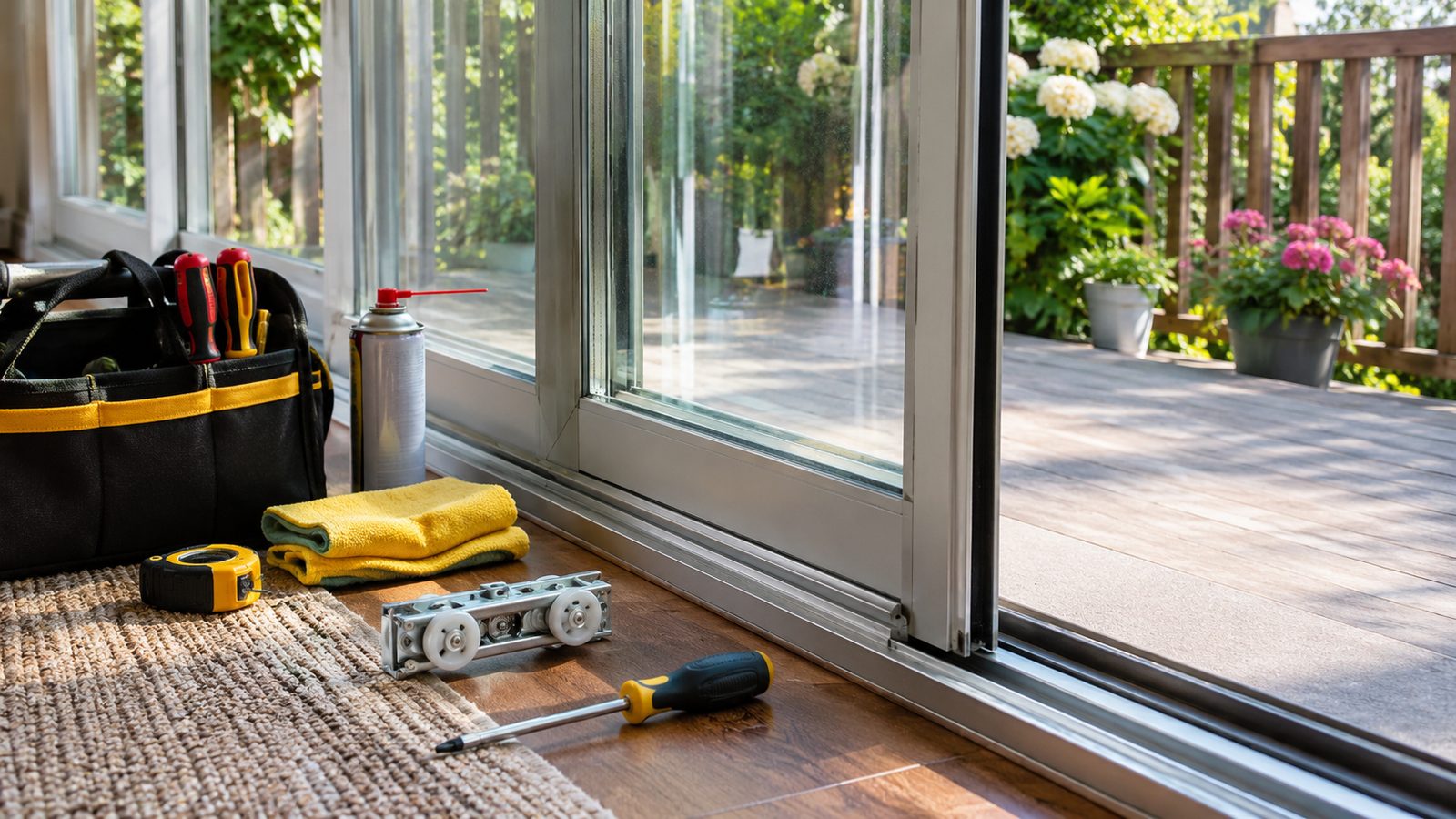
A sliding glass door should open smoothly, close securely, and keep outside air and moisture from entering your home. When it sticks, falls off its track, or develops drafts, the problem often involves worn hardware or damaged seals. This sliding glass door repair guide explains common problems, practical DIY fixes, and situations requiring professional help. You’ll also learn how to protect the glass and avoid costly mistakes during repairs.
Quick Guide to Common Sliding Door Problems
| Problem | Likely cause | Recommended fix | DIY difficulty |
|---|---|---|---|
| Door is hard to slide | Dirty track or worn rollers | Clean, lubricate, adjust rollers | Easy |
| Rollers are damaged | Worn or broken assemblies | Replace compatible rollers | Moderate |
| Track is bent | Impact or repeated wear | Straighten or install repair strip | Moderate |
| Door comes off track | Misaligned or damaged rollers | Inspect and reposition safely | Moderate to difficult |
| Lock won’t catch | Misaligned strike plate or latch | Adjust or replace hardware | Easy to moderate |
| Drafts or water leaks | Damaged weatherstripping or blocked weep holes | Replace seals and clear drainage | Easy |
| Screen door sticks | Dirty rollers or damaged frame | Clean, adjust, or rescreen | Easy to moderate |
| Glass looks foggy or cracked | Failed glass seal or broken pane | Replace glass unit or call a glazier | Professional |
What You’ll Need Before Starting
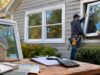
Gather basic tools before attempting minor maintenance or adjustments. Having the right supplies reduces interruptions and helps prevent accidental damage. Basic tools and materials.
- Screwdrivers, including Phillips and flathead types
- Vacuum cleaner with a narrow attachment
- Soft cleaning cloths and a small brush
- Mild household cleaning solution
- Silicone spray lubricant
- Replacement rollers matched to the existing assembly
- Measuring tape
- Wood block and hammer
- Replacement weatherstripping or pile
- Work gloves and eye protection
Keep children and pets away from the work area. Wear gloves when handling metal edges, damaged hardware, or glass components. Sliding glass panels are heavy, so never attempt to handle one alone or force it through a tight opening.
Sliding Glass Door Repair: How to Fix Common Problems
Start by identifying the symptom before removing hardware or purchasing replacement parts. Many problems have simple causes, but the wrong repair can damage the track or frame.
1. Fix a Door That Is Hard to Slide
A door that requires extra effort usually has dirty tracks, poorly adjusted rollers, or worn wheels. Dirt, sand, pet hair, and debris can collect along the bottom channel. These materials increase friction and prevent smooth movement. Try these steps before replacing any components:
- Open the door and inspect the bottom track.
- Vacuum loose dirt, dust, hair, and debris.
- Scrub stubborn buildup using a soft brush and mild cleaner.
- Wipe the track with a clean, damp cloth.
- Dry the track completely.
- Apply a light coating of silicone spray lubricant.
- Test the door by sliding it gently several times.
Avoid oil and grease on the track. These products attract dirt and can create more friction over time. Silicone spray is a better choice for routine sliding-track maintenance. If cleaning doesn’t help, inspect the roller-height adjustment screws. These screws are usually accessible through openings near the bottom edges of the movable panel. Turn them in small increments to raise or lower the panel until it sits evenly. Make adjustments gradually on both sides. Test the movement after each adjustment to avoid creating uneven gaps.
2. Replace Worn or Broken Rollers
Rollers support the movable panel and allow it to travel along the bottom track. Over time, their wheels can become flattened, cracked, corroded, or seized. Damaged rollers often cause grinding noises, uneven movement, and repeated sticking. Replacing them requires removing the glass panel, which demands extra care. General replacement procedure:
- Identify the roller assembly and find compatible replacement parts.
- Prepare a clear, stable area where the panel can be handled safely.
- Have another adult help support the panel throughout removal.
- Lift the panel upward into the head track.
- Tilt the bottom edge outward carefully to remove the panel.
- Place the panel on a suitable padded, stable support.
- Remove the old roller assemblies from the bottom rail.
- Install replacement rollers matching the original size and model.
- Reinstall the panel with assistance and adjust its height.
Never attempt this job alone. The panel is heavy, and losing control can cause serious injuries or shattered glass. If the panel feels stuck, stop rather than forcing it out. Choose compatible replacement rollers. Compare their dimensions, mounting style, wheel design, and model specifications before purchasing. Similar-looking assemblies aren’t necessarily interchangeable.
3. Repair a Bent or Damaged Track
A damaged track can make the door catch at specific points. You might notice scraping, clicking, or resistance whenever the rollers cross the affected section. Small dents can sometimes be corrected without replacing the entire track. For a minor bend, use a suitable block of wood and a hammer. Position the block against the damaged area and tap gently to restore its shape. Avoid striking the metal directly because this can create additional dents. For more extensive wear, consider a track cover or repair strip. These products provide a replacement running surface over a damaged section. Check compatibility with the door and roller design before installation. Severely damaged tracks may require professional replacement. Avoid operating the panel when the track cannot support it properly.
4. Put a Sliding Door Back on Its Track
A panel that jumps out of position may have low rollers, broken wheels, or an uneven track. Continued operation can worsen the damage and make the door unstable. Stop using it until you identify the cause. Check whether the top of the panel remains inside the head track. Look for damaged roller assemblies and visible obstructions along the bottom channel. Do not attempt to push or force the glass panel back into position. If the panel needs lifting, have qualified assistance available. Reinstallation may require adjusting the rollers and checking the upper retaining components. Call a door technician if the panel is unstable or the frame appears damaged.
5. Fix a Latch or Lock That Won’t Catch
A sliding door may close properly but fail to lock. This often happens when the panel drops slightly because its rollers have worn or shifted. The latch then misses the strike plate mounted on the frame. Try these checks:
- Confirm that the panel sits level within the frame.
- Inspect the strike plate for loose screws or misalignment.
- Adjust the strike plate if the hardware allows it.
- Replace a worn or broken latch mechanism.
- Tighten loose handle and lock hardware.
If the panel has dropped, correct the roller height before adjusting the strike plate. Otherwise, the lock may become misaligned again. For additional security (our home security strategies cover more layers), consider a compatible security bar or pin lock, or look at smart door lock options. These devices provide another physical barrier against unwanted opening. They should supplement, not replace, a functioning primary lock.
6. Stop Drafts and Water Leaks
Air leaks around a patio door often indicate worn weatherstripping or compressed pile seals. You might notice cold air, whistling sounds, or increased moisture near the opening. Water entering the bottom channel can also indicate blocked drainage openings. Inspect the seals around the movable panel and frame. Look for torn, flattened, missing, or brittle weatherstripping. Replace damaged sections with compatible materials designed for your door. Pile weatherstripping is a common seal used along sliding-door edges. Measure the existing strip and match its backing, height, and profile before purchasing replacement material. Also inspect the small drainage openings called weep holes. These openings allow collected water to escape from the track. Clear dirt and debris gently without enlarging or damaging the openings. If water continues entering the home after cleaning and replacing seals, investigate further. Failed exterior caulking, damaged flashing, or frame problems may require professional attention.
7. Repair a Sliding Screen Door
Screen doors can develop problems separate from the main glass panel. Common issues include torn mesh, loose rollers, bent frames, and dirt inside the screen track. Start by vacuuming the screen-door channel and inspecting its wheels. Adjust the small roller screws if the manufacturer provides them. Replace damaged screen rollers when cleaning and adjustment fail. Torn mesh can often be replaced (see our window screen replacement guide for materials and steps) without buying a complete screen assembly. Remove the old spline, install compatible replacement mesh, and secure it using the correct spline size. Trim excess material carefully after checking the tension. A bent or twisted frame may need replacement. Avoid forcing a damaged screen into its opening because this can worsen the frame distortion.
8. Deal With Foggy or Cracked Glass
Fogging between double-pane glass usually indicates a failed insulated-glass seal. Moisture enters the space between the panes, creating cloudy patches that ordinary cleaning cannot remove. The typical solution is replacing the sealed glass unit rather than cleaning the surface. This repair usually requires a professional glazier. Proper measurements, glass specifications, and installation methods matter for a secure result. Cracked glass requires even greater caution. Sliding patio doors commonly use tempered safety glass, which can break into numerous small pieces. Never attempt to remove or replace a large glass pane yourself. Keep people away from the damaged area and avoid operating the door. If the pane remains intact but cracked, use an appropriate temporary safety measure without pressing or stressing the glass. For shattered glass, restrict access and contact a glazier promptly. A professional can assess the damage, secure the opening, and arrange suitable replacement glazing.
DIY Repair vs. Hiring a Professional
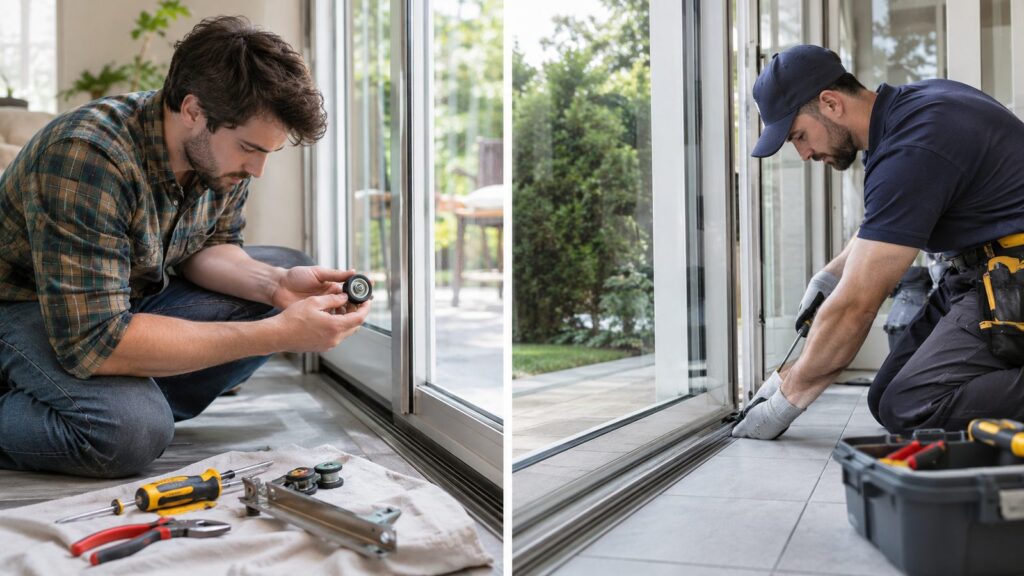
Not every repair requires a service call. Cleaning, basic adjustments, screen maintenance, and accessible weatherstripping replacement are reasonable projects for many homeowners. More complex work carries additional risks. Heavy glass panels, damaged frames, structural problems, and broken glazing require experience and appropriate equipment.
| Repair type | DIY suitability | Relative cost tier |
|---|---|---|
| Track cleaning | High | Lowest |
| Silicone lubrication | High | Lowest |
| Roller-height adjustment | High | Lowest |
| Weatherstripping replacement | High | Low |
| Screen mesh replacement | Moderate to high | Low |
| Roller assembly replacement | Moderate | Medium |
| Track repair or replacement | Moderate to low | Medium to high |
| Lock or latch replacement | Moderate | Low to medium |
| Foggy glass replacement | Low | High |
| Cracked glass replacement | Not recommended | High |
These tiers describe general repair complexity and relative expense, not guaranteed local prices. Actual costs depend on door construction, replacement-part availability, labor, and damage severity.
When Should You Call a Professional?
Contact a qualified technician or glazier when:
- The glass is cracked, shattered, or unstable.
- The panel needs removal but cannot be handled safely.
- Roller replacement requires lifting a heavy panel.
- The track is severely bent or structurally damaged.
- Water continues entering despite basic seal maintenance.
- The frame is warped, loose, or separating from the wall.
- The door repeatedly comes off its track.
- Locking problems remain after alignment adjustments.
A professional inspection can also identify related problems before they damage additional components. Ask for an itemized estimate covering parts, labor, and any recommended replacement work.
How to Prevent Future Sliding Door Problems
Regular maintenance can reduce friction and extend the service life of door hardware. A few simple checks can prevent minor issues from developing into expensive repairs. Follow this maintenance routine:
- Monthly: Remove dirt and debris from the bottom track.
- Every few months: Inspect roller movement and apply suitable silicone lubricant when needed.
- Seasonally: Check weatherstripping, pile seals, and drainage openings.
- Twice a year: Inspect locks, handles, rollers, and screen-door hardware.
- After severe weather: Look for water intrusion, loose seals, and track damage.
Avoid slamming the panel or forcing it through resistance. Address unusual noises and uneven movement early. Keep the drainage openings clear, especially before periods of heavy rain.
Frequently Asked Questions
How do I make my sliding glass door slide smoothly?
Start by removing dirt and debris from the bottom track. Apply silicone spray lightly after cleaning and drying the surface. If resistance continues, inspect the roller assemblies and adjust their height.
Can I replace sliding glass door rollers myself?
You can replace them if you have suitable experience, compatible parts, and safe assistance. Removing the glass panel requires two people because it is heavy. Hire a technician if the panel cannot be handled securely.
Why does my sliding door keep coming off the track?
Common causes include broken rollers, incorrect roller adjustment, and damaged tracks. A panel that repeatedly derails needs inspection before further use. Continued operation can damage the rollers and frame.
What lubricant should I use on sliding door tracks?
Use a suitable silicone spray lubricant after removing dirt and debris. Avoid ordinary oil and grease because they attract dust and grit. Follow the door manufacturer’s maintenance instructions when available.
Can a bent sliding door track be repaired?
Minor bends may respond to careful straightening with a wood block and hammer. Track covers and repair strips can address certain damaged running surfaces. Severe damage may require professional track replacement.
Why won’t my sliding glass door lock?
The panel may have dropped, causing the latch to miss the strike plate. Adjusting the rollers can restore alignment. If the hardware remains faulty, the strike plate or latch may need replacement.
Is foggy sliding door glass repairable?
Fog between double-pane glass indicates a failed insulated-glass seal. Cleaning the outside surfaces won’t remove moisture trapped between the panes. A glazier can assess and replace the sealed glass unit.
When should I replace the entire sliding door?
Consider full replacement when the frame is severely damaged, the structure is unstable, or multiple components have failed. A sound frame with isolated hardware problems usually supports individual repairs. Compare the repair scope with a replacement estimate before deciding.
Keep Your Sliding Door Safe and Functional
A sliding glass door doesn’t always need complete replacement when something stops working. Cleaning, lubrication, roller adjustment, seal replacement, and minor hardware repairs can solve many common problems. The key is identifying the actual cause before choosing a repair. Prioritize safety whenever glass or heavy panels are involved. Leave broken glazing, unstable panels, and complex track or frame damage to qualified professionals. With regular maintenance and timely repairs, your door can remain easier to operate, secure, and comfortable throughout the year. —