
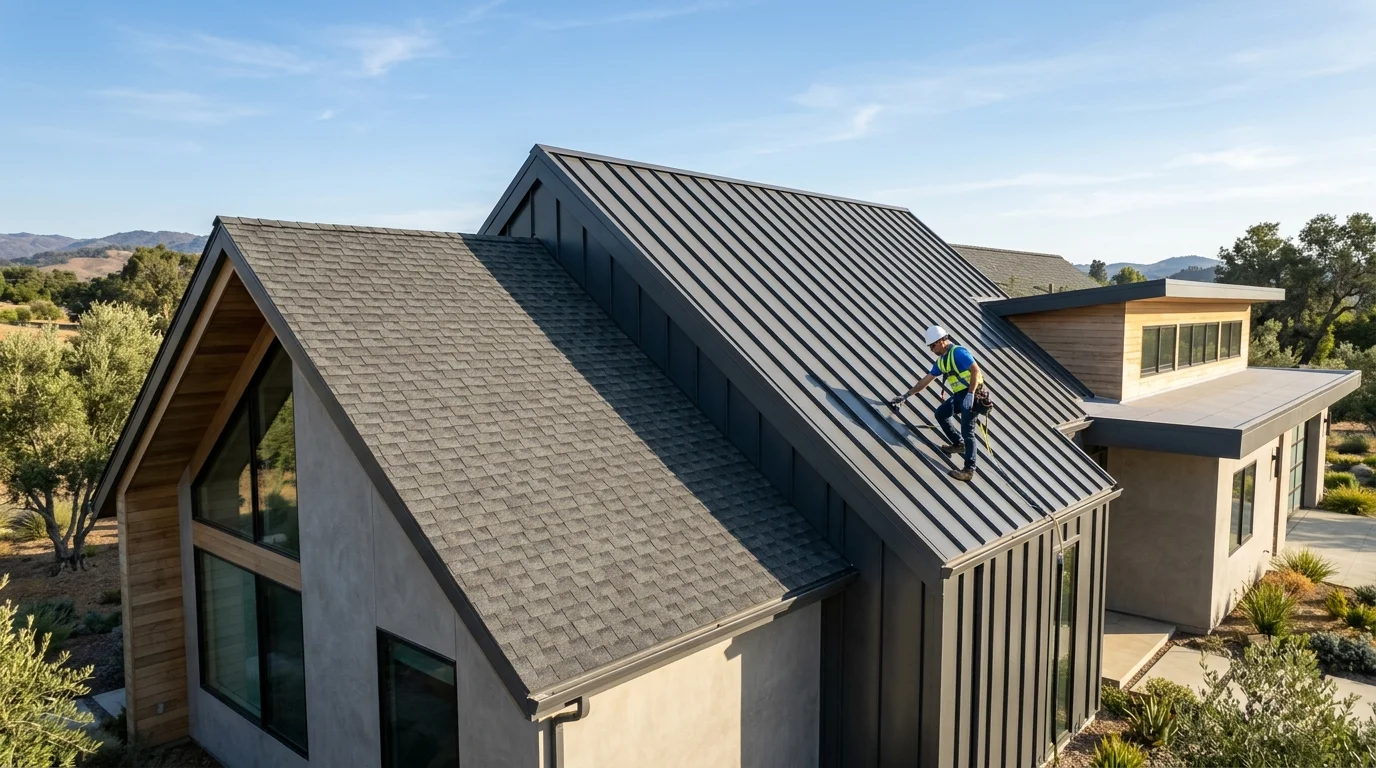
When planning an exterior renovation or building a custom home from scratch, understanding the engineering relationship between roof pitch and material selection is vital. Roof pitch, the vertical rise divided by the horizontal run; determines how quickly water sheds, how much wind uplift a structure experiences, and which roofing products can be legally or safely installed. Partnering with seasoned professionals like Edison California Roofing INC ensures that your selected materials match your precise structural slope, guaranteeing decades of leak-free performance and structural integrity.
Visit Edison California Roofing Inc: https://share.google/fOhIM9UpSq5mE4OUu
This comprehensive guide explores how roof slope dictates material compatibility, structural longevity, and overall roofing performance.
Why Roof Pitch Dictates Material Compatibility
Every roofing material is engineered to operate within specific slope parameters. Installing the wrong material on an improper pitch almost always leads to premature leaks, warranty invalidation, and structural water damage.
Key Reasons Slope Matters
- Drainage Velocity: Steeper slopes shed rainwater and melting snow rapidly, while low-slope roofs rely on waterproof membranes to prevent pooling water.
- Wind Resistance Mechanics: Different pitches react uniquely to wind uplift forces, requiring specialized fastening or interlocking clip patterns.
- Underlayment Requirements: Low slopes demand multi-layered self-adhering ice and water shields, whereas steep slopes prioritize breathable underlayments.
- Aesthetic Proportions: Matching material profiles to correct pitch angles enhances the architectural harmony and visual balance of the structure.
Low-Slope And Flat Roof Systems (0:12 to 2:12 Pitch)
Roofs with minimal slope cannot rely on gravity alone to shed water quickly, making watertight membrane integrity absolute.
Engineered Low-Slope Options
- TPO and EPDM Membranes: Single-ply synthetic sheets welded or glued at seams to create a seamless, waterproof barrier across commercial and residential flat roofs.
- Modified Bitumen: Multi-ply rolled asphalt systems reinforced with polyester or fiberglass mats for superior puncture and tear resistance.
Conventional And Moderate Pitch Roofs (3:12 to 6:12 Pitch)
Moderate pitches represent the most common residential configuration, offering safe walking surfaces and efficient water shedding for standard roofing materials.
Ideal Materials For Moderate Slopes
- Architectural Asphalt Shingles: The most popular North American roofing choice, offering excellent wind resistance and diverse aesthetic profiles.
- Snap-Lock Metal Panels: Concealed-fastener metal systems that snap together securely on moderate slopes without requiring heavy mechanical seaming tools.
- Standard Concrete Tiles: Interlocking concrete tiles provide classic Mediterranean aesthetics and robust durability on standard residential trusses.
Steep-Slope Architecture (7:12 Pitch and Above)
Steep roofs drain water exceptionally fast, reducing leak risks from standing water while increasing safety demands during installation.
Premium Steep-Slope Options
- Natural Clay Tiles: Heavy, kiln-fired clay barrel tiles lock together to create stunning, fire-resistant profiles that last over a century.
- Standing Seam Mechanical Lock Metal: Field-seamed metal panels that deliver unmatched wind resistance and sleek architectural lines on steep peaks.
- Natural Slate Shingles: Premium stone tiles offering elite architectural prestige and multi-generational durability.
Summary Checklist For Matching Pitch And Materials
Keep these core evaluation steps in mind when assessing your roof slope:
- Calculate Exact Pitch: Measure the vertical rise over a 12-inch horizontal run before selecting materials.
- Respect Manufacturer Minimums: Never install shingles or tiles below their certified minimum slope threshold.
- Prioritize Waterproofing: Use high-grade underlayments on low slopes prone to wind-driven rain.
- Consult Local Experts: Partner with licensed regional contractors to verify building code compliance and material longevity.
By evaluating your roof pitch carefully and selecting compatible materials with expert guidance from Edison California Roofing INC, you ensure a secure, high-performance exterior that stands the test of time.