


A crowded garage does not always need more cabinets or another freestanding shelf. Garage ceiling storage can move seasonal and bulky belongings above the floor while preserving parking and work areas. The safest setup starts with your ceiling structure, available clearance, and the items you need to store.
Garage ceiling storage works best for rarely used items placed on systems secured to suitable structural framing. Choose a system around ceiling construction, garage-door clearance, access needs, and verified load limits. Never depend on drywall alone, and seek structural advice when your framing capacity is uncertain.
Garage Ceiling Storage at a Glance
| Planning factor | Practical approach |
|---|---|
| Best items | Seasonal decorations, camping gear, empty coolers, lightweight outdoor equipment |
| Common systems | Fixed racks, tote rails, hooks, pulley hoists, platform shelves |
| First measurement | Ceiling height and garage-door travel |
| Main structural concern | How and where the system transfers weight into framing |
| Best location | Clear ceiling zones away from moving door hardware. |
| Access frequency | Reserve overhead areas for items you use less often. |
| Avoid overhead. | Hazardous liquids, fragile valuables, unstable containers |
| Professional help | Consider it when framing, loads, utilities, or installation points are uncertain. |
The steel rack’s advertised capacity does not automatically tell you what your ceiling can support. Ceiling construction, spans, framing type, and existing loads affect the answer. U.S. residential codes also distinguish attic areas designed for no storage from areas designed for limited storage.
Why Overhead Storage Makes Sense
Garage floors have several competing jobs. You may need room for vehicles, lawn equipment, tools, bicycles, and a workbench. Moving low-use belongings upward can free valuable space without increasing the garage footprint. This approach works especially well after you remove things you no longer need. HomeVotel’s guide to identifying garage clutter hotspots can help you decide what deserves permanent storage.
Clearing excess belongings first also prevents you from building overhead capacity for items you should discard. Overhead space can also support a garage that serves several purposes. Homeowners may need parking during weekdays and project space on weekends. HomeVotel’s ideas to expand your home’s square footage without moving explain why careful organization matters in flexible garages.
9 Garage Ceiling Storage Ideas Worth Considering
Different systems solve different storage problems. Start with what you need to store instead of choosing a rack by appearance. Access frequency, item shape, available height, and structural conditions should guide the decision.
1. Fixed Overhead Storage Racks
Steel ceiling racks provide broad platforms for plastic totes and boxed seasonal items. They work well when you want predictable storage zones and do not need daily access. Adjustable drop heights can help fit the rack between the ceiling and nearby obstacles. These racks still require correct attachment to suitable framing.
Manufacturer installation instructions commonly require fasteners to reach ceiling joists or rafters rather than drywall alone. Follow the instructions supplied with your exact product instead of substituting generic hardware.
2. Sliding Tote Rails
Tote rails hold storage containers by their upper rims instead of supporting them on a full platform. This design can use narrow ceiling sections that might otherwise stay empty. Matching containers also create an orderly system that is easy to label. Check that each tote is compatible with the rail dimensions before loading it. Avoid brittle, damaged, or heavily overloaded containers because their rims carry the load. Place lighter items inside when practical.
3. Ceiling-Mounted Hooks
Hooks can work for ladders, folding chairs, sports equipment, and other awkward objects. They take up less space than a full rack and let you take items down individually. This makes them useful around the perimeter of a garage. Use hardware specifically intended for the item and installation surface. A single mounting point concentrates force differently from a wide rack. Confirm both the hardware rating and the suitability of its attachment point.
4. Bicycle Hoists
Pulley systems can raise bicycles toward the ceiling while preserving wall and floor space. They are useful in garages where bikes would otherwise block walkways or vehicle doors. A controlled lift can also reduce the need to carry a bike overhead. Choose a location that leaves the suspended bicycle clear of the garage door. Inspect ropes, straps, locks, and mounting hardware periodically. Stop using a system if any lifting component shows damage or unusual wear.
5. Kayak and Paddleboard Hoists
Long recreational equipment can consume an entire garage wall. A ceiling hoist can keep kayaks or paddleboards horizontal and out of the way. Wide straps help support large equipment without creating narrow pressure points. Measure the equipment before buying or placing the system. Check clearance while the garage door travels through its complete cycle. Remember that the lowest part of the suspended item determines your usable height.
6. Over-Door Ceiling Racks
The space above an open garage door can sometimes accommodate shallow storage. This location can be useful because it occupies an area that cabinets cannot reach. It is best suited to compact, lightweight items that need infrequent access. Clearance requires careful measurement because doors, tracks, springs, and openers all move differently.
Do not estimate the door’s travel from its closed position. Operate it fully and verify clearances before choosing a mounting location.
7. DIY Wooden Platforms
A properly planned wooden platform can create custom dimensions for unusual garage layouts. It may suit homeowners who already have appropriate carpentry skills and understand their ceiling structure. Custom construction can also accommodate standard tote sizes. This is not a good project for guesswork about framing.
Ask a qualified professional when trusses, long spans, hidden services, or uncertain load capacity complicate the installation. Cutting or modifying structural truss members without approved engineering is especially risky.
8. Motorized or Lowering Storage Lifts
Lowering platforms brings stored goods closer to floor level for loading. They can reduce ladder use and improve access for large seasonal containers. Some systems use electric motors, while others use mechanical lifting arrangements. These systems typically involve more components than fixed shelving. Check the manufacturer’s installation, load, electrical, and maintenance requirements before purchase. Your ceiling structure still needs to handle the loads transferred by the lift.
9. Mixed Ceiling-and-Wall Storage
Not everything belongs overhead. Frequently used tools, chargers, cleaning supplies, and sports gear may work better on walls or cabinets. A mixed system keeps occasional items above while preserving easy access to everyday belongings. This setup can be especially useful for electric vehicle owners.
HomeVotel’s guide to home upgrades for electric car owners discusses keeping charging accessories organized and parking routes clear. Keeping regularly handled equipment below the ceiling also reduces unnecessary ladder trips.
How Much Weight Can Garage Ceiling Storage Hold?
There is no safe universal weight number for every garage ceiling. A product might have a stated load rating, but your framing has its own design conditions. Joist size, span, spacing, framing type, and existing loads can all matter. The International Residential Code distinguishes uninhabitable attics without storage from attics designed for limited storage.
That distinction shows why an advertised rack capacity should never become an assumed ceiling capacity. MiTek also notes specific conditions affecting limited-storage loading in trussed attics. Treat the lowest verified capacity in the complete load path as the practical limit. That path includes the rack, fasteners, connections, and supporting structure. Never increase stored weight simply because unused rack space remains.
How to Plan a Safe Overhead Layout
Begin with an empty floor plan and mark everything that moves or needs access. Include the garage door, tracks, opener, vehicle hatch, ladders, lighting, outlets, and attic access. Measure rather than relying on visual estimates. Then identify the ceiling construction before planning attachment points.
Finished drywall can hide conventional joists, engineered members, trusses, wiring, plumbing, or other services. This Old House also recommends identifying and marking framing before mounting an overhead rack.
Use the following planning sequence:
- List the specific belongings you want overhead.
- Weigh loaded containers instead of estimating them.
- Measure ceiling height and every moving obstruction.
- Identify the ceiling framing and safe attachment locations.
- Choose a system intended for your storage type.
- Follow its specified fasteners and installation pattern.
- Load the system gradually and distribute items as directed.
- Label containers before moving them overhead.
- Reinspect hardware and stored items periodically.
If you cannot confirm the framing or suitable mounting method, stop before drilling. Professional advice is cheaper than repairing structural damage, a vehicle, or an improperly installed system. This is especially important with engineered trusses or unexplained ceiling modifications.
What Should You Store Overhead?
Reserve ceiling space for lightweight or moderate-weight items you use occasionally. Holiday decorations, camping equipment, spare coolers, empty luggage, and seasonal sports gear are common candidates. Sealed, clearly labeled containers make those belongings easier to identify from below. Place heavier containers where the storage manufacturer permits and where handling remains safe.
Avoid stacking unstable boxes near platform edges. Arrange bins so retrieving one does not require shifting several others while standing on a ladder. Hazardous chemicals need storage suited to their labels and local requirements. Fragile valuables and temperature-sensitive belongings may also need another location. A hot, cold, or humid garage can be unsuitable for many household materials.
Fixed Rack, Tote Rail, or Hoist?
| System | Best for | Access | Main advantage | Main limitation |
|---|---|---|---|---|
| Fixed rack | Boxes and totes | Occasional | Broad storage surface | Requires lifting items onto rack |
| Tote rails | Matching bins | Occasional | Efficient use of narrow space | Depends on compatible tote rims |
| Hooks | Long or awkward gear | Moderate | Simple individual access | Concentrated mounting points |
| Pulley hoist | Bikes or long equipment | Moderate | Brings gear down | More moving components |
| Lowering platform | Multiple containers | Regular | Easier loading height | Greater cost and complexity |
For most households, a fixed rack is the straightforward choice for seasonal bins. Hoists make more sense for bicycles or long equipment that you want to retrieve individually. Tote rails fit homeowners who want compact storage and use consistent containers.
Mistakes That Can Make Overhead Storage Unsafe
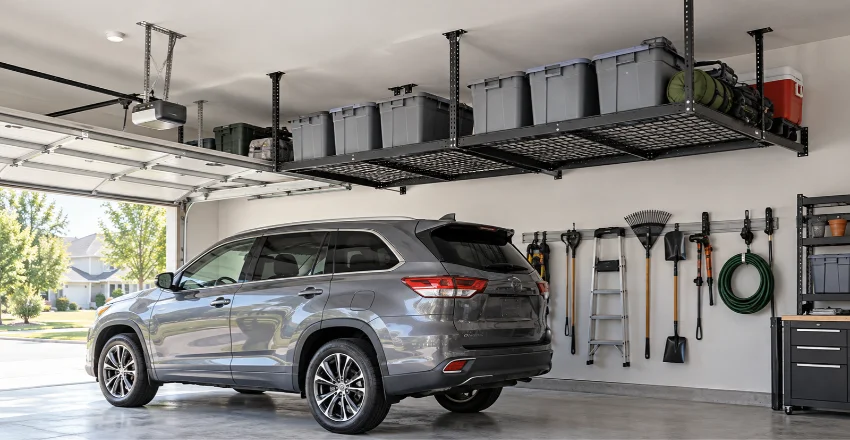
The first mistake is attaching load-bearing hardware only to drywall. Product instructions for overhead racks generally direct installers to locate and fasten into suitable structural framing. Drywall may conceal the framing, but it should not become your substitute for it. Another mistake is treating the rack’s maximum rating as permission to load the ceiling equally. Structural capacity and product capacity are separate questions.
Adding several racks can also create a combined load that deserves more careful evaluation. Poor clearance planning causes a different problem. A rack may fit while the door is closed yet conflict after the door rises. Vehicle liftgates, roof racks, lighting, and stored objects also need clearance.
Keep the System Organized After Installation
Create storage zones before you load the first container. Group holiday items, camping supplies, sports equipment, and household overflow separately. Large labels should face the direction from which you normally approach the rack. Keep a simple inventory on your phone if several identical bins sit overhead. Number each tote and record its contents. This saves you from climbing a ladder to inspect several containers.
Review the system once or twice each year. Remove things you no longer use and inspect accessible hardware for changes or damage. HomeVotel’s broader advice on comprehensive home security strategies can also help protect tools and other valuable belongings.
Garage Ceiling Storage FAQ
Is garage ceiling storage safe?
Garage ceiling storage can be safe when the system matches the building structure and is installed correctly. The rack’s rating, connections, fasteners, and ceiling framing all need consideration. Never assume drywall anchors can replace the structural attachment required by the manufacturer.
Can I attach an overhead rack through drywall?
Drywall may remain between a rack bracket and framing when the product allows that arrangement. The fasteners still need to reach the structural members specified by the installation instructions. Do not rely on the drywall itself to support an overhead storage load.
How much clearance should I leave above my garage door?
There is no single clearance that fits every door and rack combination. Measure the door, opener, tracks, and storage system through the door’s complete movement. Add enough separation to prevent stored items from entering the moving door’s path.
Are overhead racks good for heavy items?
A rack may carry substantial weight when its complete installation is designed for that load. Heavy overhead storage also makes lifting and retrieval harder. Keeping denser items lower often improves handling and reduces risk.
Should I install a garage ceiling rack myself?
DIY installation may suit someone with the right tools, framing knowledge, and product instructions. Professional help makes sense when the structure is unclear, or engineered framing is involved. It is also sensible when hidden utilities or difficult access create uncertainty.
Make Overhead Space Work for the Whole Garage
A useful ceiling system should make the garage easier to use, not simply move clutter upward. Sort your belongings first, reserve overhead space for suitable low-use items, and keep everyday equipment within easy reach. The result should improve parking, movement, and access at the same time.
Measure the complete space before buying hardware, and verify how the proposed system transfers its load. Follow the manufacturer’s instructions and seek qualified structural guidance whenever capacity is uncertain. A careful plan gives you additional storage without turning the ceiling into an avoidable risk.