

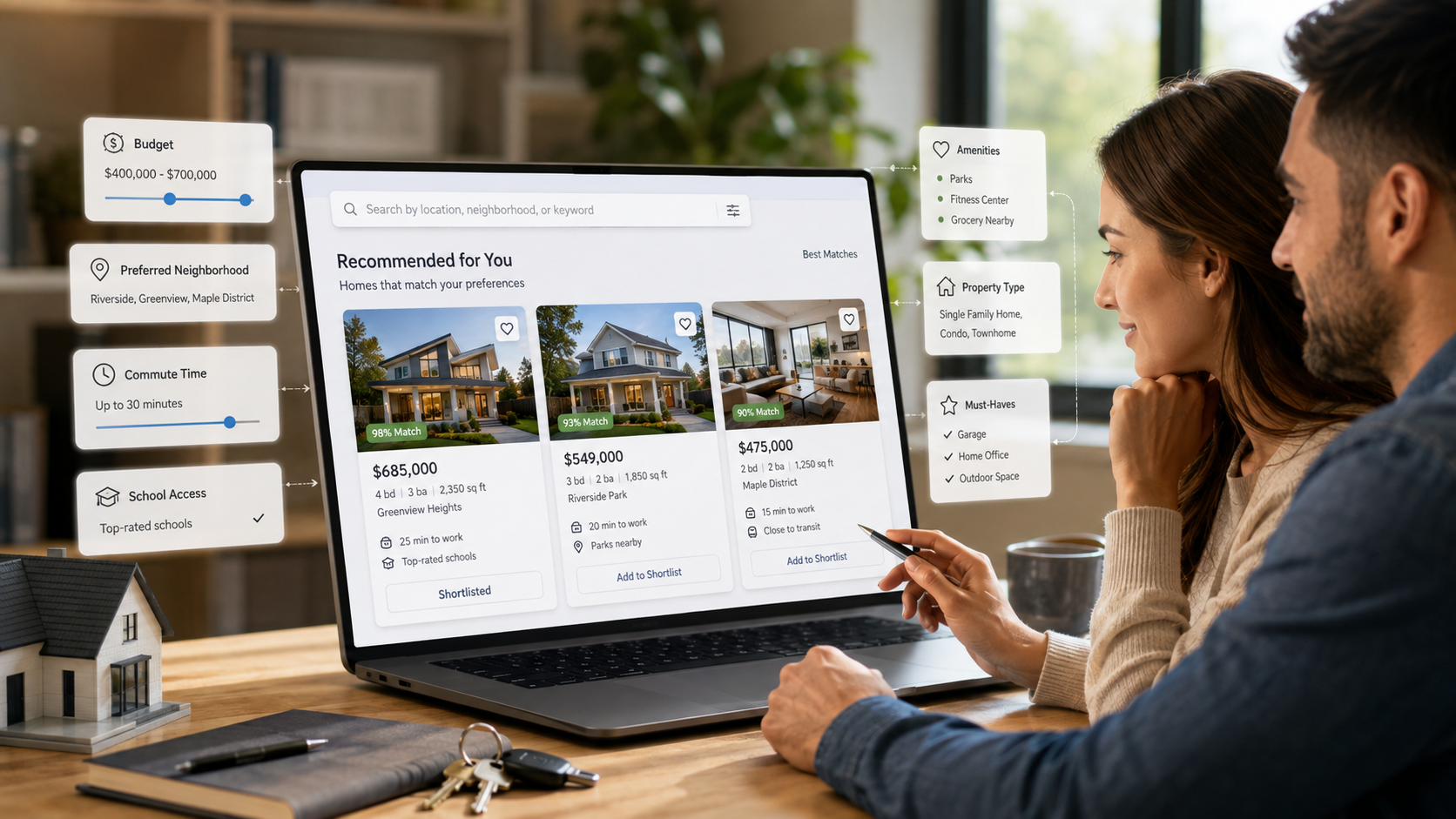
Searching through hundreds of homes that miss your budget, commute, or lifestyle is a poor use of time. A Personalized Property Search narrows that noise by learning what matters before presenting the next property.
A Personalized Property Search cuts through basic filters and focuses on real priorities, including affordability, timing, access, and long-term plans. The strongest Personalized Property Search helps buyers and renters compare fewer properties with more confidence.
AI, better property data, and trusted platforms are moving property discovery closer to how people already shop, research, and make decisions online.
Why Personalized Property Recommendations Are the Future
Personalized property recommendations use a person’s stated needs, search activity, and property data to suggest homes that fit more than a price range. They move beyond the familiar filters of bedrooms, bathrooms, and location.
That matters because two homes with the same price can offer completely different outcomes. One may suit a family that needs nearby schools and outdoor space. The other may better suit an investor focused on transport links, tenant demand, and rental income.
Modern buyers expect services to recognize context. Streaming platforms remember preferred genres. Shopping platforms suggest products that match past behavior. Property search is heading in the same direction, but the decision carries higher stakes.
A useful recommendation may consider commute time, local amenities, property condition, move-in timing, building facilities, tenure, and likely monthly costs. It should also make comparisons easier when several homes look appealing on paper.
The shift is already visible in major consumer platforms. Realtor.com’s AI home-search platform combines property discovery with affordability guidance and map-based context. The aim is clear: help people ask better questions before they contact an agent or lender.
Basic Filters Are Not Enough for Real Property Decisions
A three-bedroom home under a set budget is not a complete brief. A family may need a safe school route, room for a home office, and a manageable drive to work. An investor may place more weight on occupancy demand, public transit, and ongoing maintenance costs.
Recommendations should organize the search, not make the decision for you. They can’t replace an in-person inspection, financing review, legal checks, or advice from a qualified property professional.
A good system brings relevant options forward. A responsible buyer still verifies what matters.
Better Matches Mean Less Search Fatigue and Fewer Poor Choices
Search fatigue sets in when every listing requires another round of filtering. You open dozens of tabs, compare incomplete details, and still wonder whether a better fit was missed.
A shorter, well-matched list changes the pace. It helps you identify tradeoffs sooner, compare properties on the same criteria, and respond before a suitable home disappears.
That only works when listing information is current and complete. Outdated prices, missing floor areas, vague photos, and unclear tenure details can turn a promising recommendation into wasted time.
How a Personalized Property Search Turns Data into Useful Matches
A strong matching process begins with the details you provide. Budget, preferred location, property type, room count, and move-in timing create the first layer of relevance.
The system then learns from your actions. Saved homes, comparison activity, rejected listings, and viewing feedback can show which preferences are fixed and which ones are flexible. If you repeatedly save homes near a rail station, access may matter more than you first realized. Elsewhere on the site, we look at Quick Plumbing Tips to Help Save on Plumbing Bills in The Future.
Property data adds the next layer. This includes built-up area, land size, tenure, age, amenities, asking price, and listing status. Location data adds practical context, such as nearby schools, hospitals, shopping areas, and transport options.
Affordability also needs a place in the process. The asking price is only one part of the decision. Buyers may need to consider down payment requirements, monthly financing, taxes, insurance, repairs, and management costs.
The best systems explain their logic. A property might appear because it meets your budget, has a shorter commute, and offers more usable space than another saved home. That explanation is far more useful than an unexplained AI suggestion.
The Information a Recommendation System Uses
Useful recommendations often draw on a mix of practical and personal inputs:
- Your budget, preferred areas, property type, and minimum room count.
- Tenure, size, condition, move-in date, and desired amenities.
- Commute needs, transport access, schools, hospitals, and daily conveniences.
- Investment goals, expected rental demand, and target holding period.
Preferences can change quickly. A buyer may accept a smaller home for a better location. A renter may expand their search after changing jobs. The platform should make those updates easy.
AI Can Compare Homes, But People Still Make the Final Call
AI can summarize listing details, compare shortlisted homes, highlight missing information, and help estimate affordability ranges. It can also surface tradeoffs that are easy to miss when you are reviewing several properties at once.
AI property search tools are becoming more common because they reduce research time. AI-driven property search can improve matching when it uses accurate listings and clear user preferences.
Still, AI guidance is not a valuation, loan approval, legal opinion, or guarantee of future returns. Confirm material facts with the agent, lender, official documents, and relevant authorities before making a commitment.
How PropPlace.my Makes Property Recommendations More Practical
PropPlace.my applies this approach to Malaysia-focused property research. It combines property searches, agent connections, comparisons, and AI-assisted guidance in one practical workflow.
Users can search properties for sale or rent by location and property type, then save options for closer review. Instead of treating every listing as a separate decision, users can compare the details that affect affordability, comfort, and investment potential.
PropBot adds another layer of support. The AI property assistant can help users search, compare options, and think through affordability questions before they take the next step.
One Platform Connects Search, Comparison, and Property Professionals
Property decisions rarely happen in one session. A buyer may search on a weekday, compare homes later, speak with an agent, and schedule a viewing after reviewing finances.
PropPlace.my connects those stages. Users can review listing information, photos, viewing details, and agent contact information without losing the context behind their shortlist. They can also connect directly with reviewed or registered property professionals.
This reduces the gap between online research and a real conversation about a property. The recommendation is the starting point. The agent discussion, viewing, and documentation move the decision forward.
AI Tools and Market Context Help Users Look Beyond the Listing
A headline price rarely tells the full story. PropBot, calculators, guides, market information, and deal-review tools can help users assess a property with more context.
For example, an Ampang property comparison may include asking price, built-up area, land area, access to transport, and stated rental collection. Those details help a buyer see why two similar-looking homes may have different value propositions.
However, stated rental income, property size, condition, and location claims must be verified before you rely on them. Inconsistent listing details are a reason to ask sharper questions, not a reason to assume the numbers are correct.
Why PropPlace.my Supports a More Personal Search
PropPlace.my brings together a Malaysia-focused search experience, sale and rental options, agent profiles, shortlist comparison, AI-assisted help, and market guidance.
That combination is more useful than a long list of homes. It connects user preferences with evidence, comparison tools, and professional support. Buyers and renters can research with more structure before they make a high-value decision.
What Buyers and Renters Should Expect From the Next Generation of Property Search
Personalization works best when users are clear about their priorities and platforms are clear about their limits. Better matching saves time, but responsible search still depends on privacy, accuracy, and human judgment.
The advantage is straightforward: relevant recommendations can reduce noise and make property comparisons easier. The limitation is equally clear: incomplete data or incorrect assumptions can produce the wrong match.
Start With Clear Priorities, Not Just a Property Type
Set your maximum monthly cost before you begin. Then define the areas you would consider, your commute limit, move-in date, property condition, and must-have features.
Rank those priorities. Every property involves tradeoffs, and a clear ranking prevents attractive photos from distracting you from practical needs.
Saved listings and comparison tools help platforms learn what you value. Avoid filters that are too narrow, though. A slightly different neighborhood or layout may offer a better overall fit.
Check Privacy, Listing Accuracy, and Recommendation Transparency
Personalized systems use search behavior and preference data. Read the platform’s privacy information and understand what data is collected, retained, and shared.
Look for platforms that explain why a property appears in your recommendations. They should show the source of key facts, identify agent credentials, and make reporting errors straightforward.
Recommendations can be influenced by incomplete listings, old information, paid placement, or preferences you no longer hold. Treat every match as a researched lead, not a final answer.
Use Recommendations as a Starting Point for Professional Due Diligence
When a property looks promising, contact the agent and arrange a viewing. Confirm ownership, tenure, size, condition, fees, and any restrictions tied to the property.
Review financing and total costs before making an offer. Investors should test rental assumptions against local demand, vacancy risk, maintenance, and management expenses.
Personalization improves discovery and comparison. It doesn’t remove the need for careful due diligence.
The Future Is More Focused Property Decisions
Property search is becoming more personal because generic filtering no longer matches the complexity of buying or renting a home. The strongest recommendations combine personal preferences, reliable property data, AI assistance, market context, and access to qualified professionals.
PropPlace.my offers a practical Malaysia-focused example through property search, saved comparisons, registered or reviewed agent connections, PropBot, calculators, and market guidance.
Start with a Personalized Property Search, build a shortlist around your real priorities, and verify every important detail before you buy or rent. Better recommendations help you ask better questions.