
A radon mitigation system reduces radon concentrations inside a home by preventing radioactive soil gas from accumulating indoors. Most systems use a pipe and fan to draw gas from beneath the foundation. The gas then vents safely above the home, where outdoor air quickly dilutes it.
The U.S. Environmental Protection Agency recommends fixing homes with radon levels at or above 4 picocuries per liter. Levels below 4 pCi/L still carry some risk and may also be reduced. Testing is the only reliable way to determine your home’s radon level.
Radon Mitigation at a Glance
| Topic | What U.S. Homeowners Should Know |
|---|---|
| EPA action level | 4 pCi/L or higher |
| Common solution | Active soil depressurization |
| Typical components | Suction point, PVC pipe, fan, vent and system monitor |
| Typical 2026 installation cost | About $800–$1,300 for many standard installations |
| Possible reduction | Some systems can reduce radon by up to 99% |
| Testing after installation | Needed to confirm the system works |
| Ongoing monitoring | Check the system indicator and periodically retest |
| Professional help | A qualified radon mitigation contractor is recommended |
What Is a Radon Mitigation System?
A radon reduction system controls radioactive gas that naturally forms as uranium breaks down in soil and rock. Radon can move through foundation openings and collect inside enclosed buildings. You can’t see, smell, or taste the gas, so testing is essential. The most common systems don’t attempt to filter radon from occupied rooms. Instead, they intercept soil gas before significant amounts enter the living space. This approach addresses the main source rather than relying on increased indoor ventilation alone. Homeowners planning renovations should consider testing before work begins. Changes to foundations, basements, ventilation, and air sealing can affect radon movement. Home Votel’s guidance on testing for radon before renovating provides useful preparation for remodeling projects.
How Does a Radon Mitigation System Work?
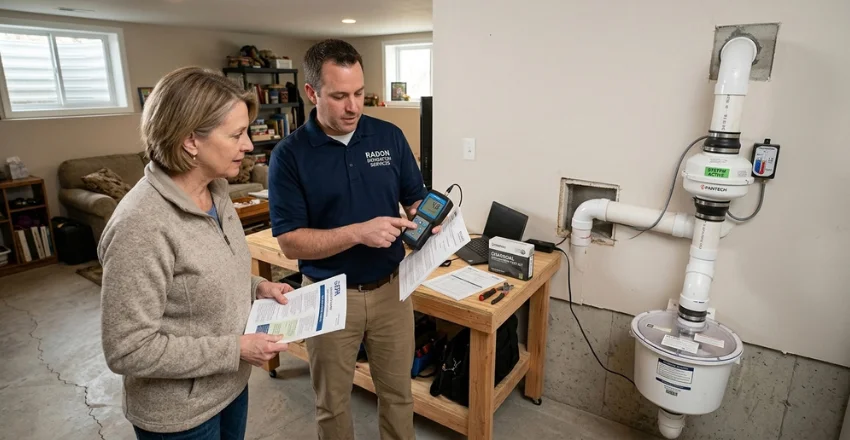
Most existing U.S. homes with elevated readings use some form of active soil depressurization. A contractor creates one or more suction points beneath the home’s foundation. PVC piping connects those points to a continuously operating radon fan. The fan creates lower pressure beneath the slab than inside the house. This pressure difference encourages soil gas to enter the piping instead of foundation openings. The pipe carries the collected gas outdoors and discharges it away from occupied areas. A system monitor also provides a simple way to check operating pressure. It doesn’t measure the home’s radon concentration. A follow-up radon test remains necessary to determine whether the installation achieved the intended reduction.
Main Types of Radon Reduction Systems
The right design depends heavily on the foundation and existing drainage features. A basement may require a different configuration than a crawlspace. Contractors assess the building before selecting suction locations, fan capacity, and pipe routing.
Active Sub-Slab Depressurization
Active sub-slab depressurization is commonly used for houses with concrete slab foundations. A suction point passes through the slab into the material underneath. The connected fan continuously draws soil gas toward the vent pipe. EPA guidance indicates that sub-slab suction can produce substantial reductions when properly designed. Performance depends partly on how easily air moves beneath the concrete. Some houses need multiple suction points to create adequate pressure across the foundation.
Drain-Tile or Sump Suction
Homes with perimeter drain tiles may already have useful pathways beneath the foundation. A mitigation contractor can sometimes connect the suction system to this drainage network. A sump opening may also become part of the design when conditions allow. The sump usually requires a durable, airtight cover when incorporated into mitigation. That cover helps maintain negative pressure beneath the floor. It can also limit soil gas entry through an otherwise open sump pit.
Crawlspace Systems
A dirt-floor crawlspace generally requires a different approach. Contractors can cover exposed soil with a durable membrane and seal its edges. A fan then draws soil gas from beneath that membrane and vents it outside. This method is commonly called submembrane depressurization. Proper sealing matters because leaks can reduce system performance. Crawlspace accessibility and foundation complexity can also affect installation cost.
Passive Systems in New Homes
New construction can incorporate radon-resistant features before occupants move in. These systems commonly include a gas-permeable layer, plastic sheeting, sealed openings, and vertical vent piping. Their design can make later activation straightforward. A passive system relies on natural airflow instead of a powered fan. If post-construction testing shows elevated levels, an inline fan can often convert it into an active system. Every new home should still be tested because construction features don’t guarantee a specific indoor reading.
Radon Mitigation System Cost in 2026
Current national cost estimates vary because homes and installation requirements differ. HomeAdvisor reports a 2026 average near $1,028, with a common range around $786 to $1,274. Angi reports an average around $1,043 and a common range of roughly $805 to $1,326.
Those figures are useful planning benchmarks rather than guaranteed quotes. Large foundations, difficult pipe routes, multiple suction points, crawlspaces, or finished basements can increase labor and material requirements. Local labor rates and permit requirements can also change the final price.
| Cost Factor | Why It Matters |
|---|---|
| Foundation type | Slabs, basements and crawlspaces require different designs |
| House size | Larger footprints may require additional suction points |
| Sub-slab material | Air movement beneath the slab affects system design |
| Pipe routing | Long or concealed routes increase installation work |
| Finished areas | Contractors may need extra work to protect finished spaces |
| Fan requirements | Larger or complex foundations can require different fan capacity |
| Local requirements | Permits and professional requirements vary by location |
Get written estimates from qualified contractors when comparing options. The cheapest proposal may not provide the best pressure coverage or pipe placement. Ask each contractor how the proposed design addresses your home’s specific foundation.
When Should You Install a Radon Mitigation System?
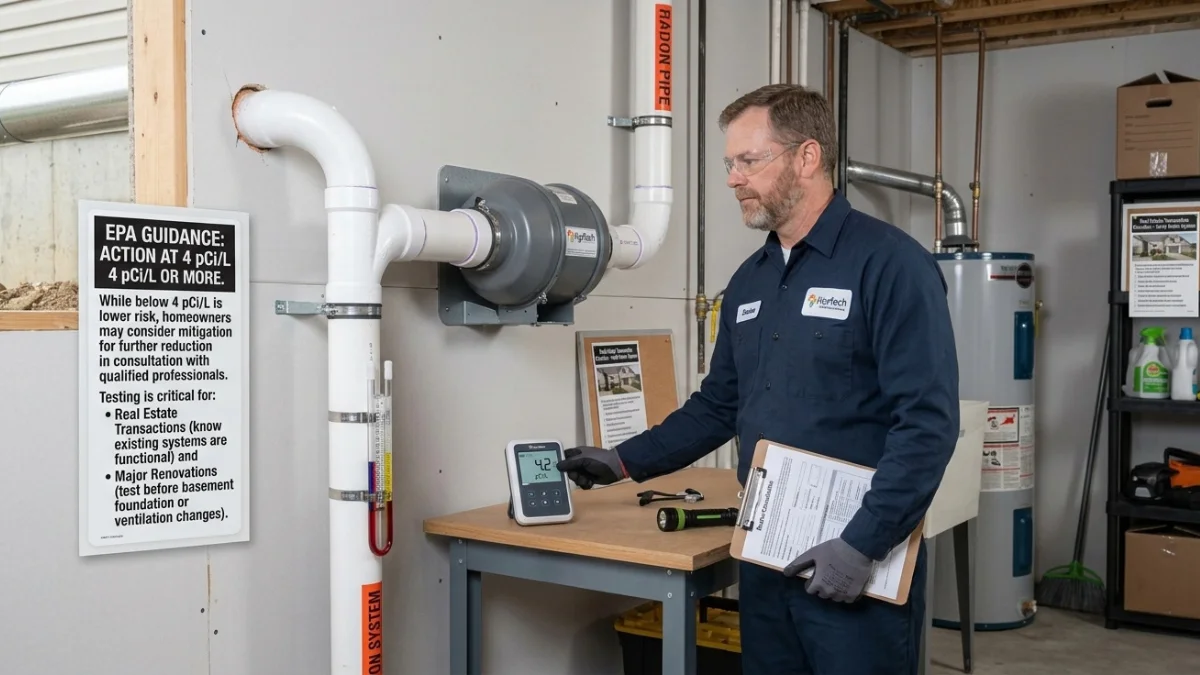
EPA guidance recommends taking action when testing shows 4 pCi/L or more. A reading below that threshold doesn’t mean exposure carries zero risk. Homeowners can discuss lower readings with qualified professionals when deciding whether additional reduction makes sense. Testing also deserves attention during real estate transactions and major renovations. Buyers should know whether a property has been tested and whether an existing system works. Homeowners remodeling a basement should test before making foundation or ventilation changes.
Home Votel’s planning guide for essential home systems during renovation can help place mitigation within a broader remodeling plan. Coordinating work early may reduce conflicts between vent piping, electrical work, insulation, and finished surfaces.
What Happens During Professional Installation?
The contractor first reviews the home’s foundation, existing drainage features, and potential pipe routes. Diagnostic work may help determine how readily air moves beneath the slab. This information guides suction-point placement and fan selection. Next, the installer creates the suction opening and connects the PVC piping. The pipe runs from beneath the foundation toward an approved outdoor discharge location. Openings around the pipe and other significant foundation penetrations are sealed where appropriate.
The contractor then installs the fan outside the occupied space or in another permitted location. A system indicator allows homeowners to see whether suction remains present. The finished installation should operate continuously unless a qualified professional recommends otherwise. Finally, the home needs another radon test. This step confirms whether the system reduced concentrations sufficiently. Installation quality can’t be judged from appearance or fan noise alone.
How Much Can Mitigation Reduce Radon?
EPA information states that some reduction systems can lower indoor concentrations by up to 99 percent. The exact result depends on the house and selected method. Sub-slab suction commonly performs well when air can move effectively beneath the foundation. No responsible installer should promise a specific percentage without considering the building. The meaningful measurement is the post-mitigation radon test. Continued testing helps confirm that concentrations remain controlled as building and soil conditions change.
Does a Radon System Need Maintenance?
A properly installed system usually requires limited homeowner attention, but it shouldn’t be ignored. Check its warning device or pressure indicator regularly. An unusual reading may indicate a fan, pipe, or pressure problem. EPA guidance says mitigation fans may operate for five years or longer before repair or replacement becomes necessary. The agency recommends retesting a home at least every two years. Retesting is also sensible after significant renovations or changes affecting the foundation. Don’t assume a running fan proves indoor concentrations remain low. The monitor usually confirms pressure rather than measuring radon itself. Periodic testing provides the information that matters most.
Can You Install a System Yourself?
Radon reduction involves more than attaching a fan to PVC pipe. Effective installations require correct suction placement, pressure control, sealing, exhaust positioning, electrical work, and post-installation testing. Poor design may leave sections of the foundation without adequate depressurization. EPA materials recommend using a qualified mitigation professional for most homeowners. State requirements can differ, so check your state radon program before hiring anyone. Ask prospective contractors about credentials, diagnostic procedures, warranties, and post-installation testing. Professional installation can also reduce problems during future home sales. Clear documentation gives buyers useful information about the system’s design and performance. Keep installation records and radon test results with other important property documents.
Radon Mitigation and Home Renovations
Basement remodeling creates a useful opportunity to consider radon before walls and ceilings hide possible pipe routes. Test before beginning the project. If mitigation is needed, coordinate the installation with other planned work.
Home Votel’s article on why homeowners should test for radon before renovating explains why construction changes deserve attention. Its home improvement resources can also help you coordinate radon work with broader maintenance and renovation projects. Planning systems together can reduce unnecessary disruption later.
Protect Your Home With Testing First
A radon mitigation system can provide an effective solution when testing finds elevated indoor concentrations. Active soil depressurization is a common approach, but foundation conditions determine the right design. Professional evaluation and post-installation testing are central to getting a reliable result.
Start with a properly conducted radon test before choosing equipment or requesting installation quotes. Compare qualified contractors and ask how each proposed system fits your foundation. After installation, keep monitoring the system and retest periodically to confirm continued performance.
Frequently Asked Questions About a Radon Mitigation System
Is a radon mitigation system worth installing?
Mitigation is an established way to reduce elevated indoor radon concentrations. EPA guidance recommends fixing a home when levels reach 4 pCi/L or higher. A successful installation can substantially reduce exposure when confirmed through follow-up testing.
How long does installation take?
Installation time depends on the foundation, pipe route, number of suction points, and accessibility. A straightforward house generally requires less work than a complex foundation. Your contractor should explain the expected schedule before starting.
Does the fan run all the time?
Active systems generally use continuous fan operation to maintain negative pressure beneath the foundation. Turning the fan off can allow soil gas to enter the house again. Follow the installer’s operating instructions and monitor the system indicator.
Will mitigation eliminate all radon?
The goal is to reduce concentrations rather than guarantee absolute elimination. EPA information indicates some systems can achieve reductions reaching 99 percent. Post-installation testing determines the actual result in your home.
Can I sell a house with a mitigation system?
A mitigation system doesn’t prevent a home from being sold. Buyers may view documented testing and successful mitigation as useful information about the property. Keep recent test results and system records available during a transaction.
How often should I retest after mitigation?
EPA recommends retesting at least every two years to confirm levels remain low. Testing after major structural or ventilation changes is also sensible. Follow any additional guidance provided by your state radon program.