

If you are asking what is contemporary interior design, think of a home designed for the present. The style reflects current tastes instead of following one historical period. Today, that usually means clean spaces, comfortable furniture, natural materials, warm neutrals, and carefully chosen details.
Contemporary rooms may look simple, but they should never feel unfinished. Each piece has a purpose, and open space becomes part of the design. The result feels current, comfortable, and flexible enough to change with your taste.
Direct answer: Contemporary interior design reflects the styles, materials, colors, and furniture popular in the present. It favors uncluttered layouts, clean lines, natural textures, comfortable furnishings, and thoughtful lighting. Unlike modern design, it changes as tastes and lifestyles evolve.
Contemporary Design at a Glance
| Element | Typical Contemporary Approach |
|---|---|
| Overall feeling | Clean, comfortable, current, and uncluttered |
| Colors | Warm white, beige, taupe, greige, charcoal, and controlled accents |
| Furniture | Simple silhouettes mixed with softer curves |
| Materials | Wood, stone, glass, metal, linen, wool, and textured fabrics |
| Lighting | Layered lighting with sculptural or statement fixtures |
| Layout | Open, functional, and visually connected |
| Décor | Fewer pieces with stronger visual impact |
| Main difference from modern | Contemporary changes; modern refers to a historical movement |
Key Takeaways
- Contemporary means current rather than tied to one historical era.
- Today’s version feels warmer and softer than older contemporary interiors.
- Neutral foundations work with natural wood, stone, metal, and tactile fabrics.
- Clean lines can sit beside rounded sofas, curved tables, and organic shapes.
- Natural light and layered artificial lighting help prevent a cold appearance.
- Furniture and décor should feel selected rather than crowded.
- Following every trend can date a room quickly, so use trends selectively.
What Is Contemporary Interior Design Today?
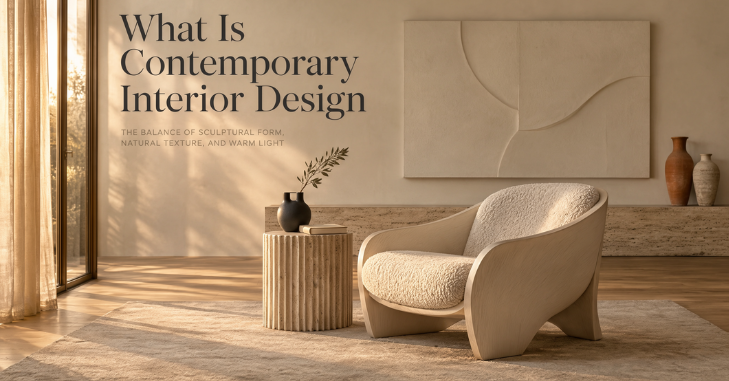
What Is Contemporary Interior Design? It reflects how people want to live now. They borrow useful ideas from modern, minimalist, Scandinavian, and other styles. Those influences are combined without copying one style from top to bottom.
Current rooms often favor warm neutrals instead of icy gray schemes. Natural wood, stone, textured textiles, and soft curves add visual warmth. This approach feels noticeably different from the glossy contemporary interiors common several years ago.
The style also values editing and practical comfort. A room does not need many decorative objects to feel finished. Instead, strong proportions, lighting, texture, and a few expressive pieces create interest.
The Main Characteristics of Contemporary Interiors
Several features appear repeatedly in present-day contemporary homes. You do not need every feature in every room. A balanced combination usually creates a stronger result.
- Clean lines: Cabinets, furniture, and architectural details usually have uncomplicated forms.
- Soft curves: Rounded chairs and curved tables soften harder architectural lines.
- Open space: Furniture placement preserves movement and gives important pieces room to breathe.
- Warm neutral colors: Cream, taupe, beige, warm white, and muted gray create calm foundations.
- Natural materials: Wood and stone provide texture that polished surfaces often lack.
- Mixed finishes: Matte, polished, smooth, and textured surfaces can appear in one room.
- Statement lighting: Pendants, chandeliers, and sculptural lamps can function as visual anchors.
- Limited décor: Larger artwork or ceramics often replace collections of small accessories.
These ideas create structure without making the room feel rigid. They also leave room for personal belongings and older furniture. That flexibility makes contemporary decorating useful for homes that evolve over time.
Homeowners exploring several aesthetics can also review HomeVotel’s interior design ideas. That overview shows how contemporary style relates to modern, minimalist, Scandinavian, and urban approaches. Comparing those styles can clarify which elements suit your home.
Contemporary vs. Modern Interior Design
Modern and contemporary are often used interchangeably, but designers usually separate them. Modern design refers to established twentieth-century movements and principles. Contemporary design refers to what feels current during the present period.
| Feature | Modern Design | Contemporary Design |
|---|---|---|
| Time period | Historical and established | Present-day and changing |
| Shapes | Strong geometric forms | Straight lines plus organic curves |
| Materials | Wood, steel, glass, leather | Wood, stone, glass, metal, and varied textiles |
| Colors | Often earthy or controlled | Warm neutrals with selective accents |
| Decoration | Restrained | Restrained but flexible |
| Flexibility | Follows a defined design vocabulary | Freely borrows from several styles |
A mid-century chair can therefore be modern and still work inside a contemporary room. The surrounding room might include newer lighting, curved upholstery, and textured stone. Contemporary decorating allows those periods to work together when color and proportion remain cohesive.
This distinction also explains why the label changes with time. Architectural Digest describes contemporary interiors as evolving rather than belonging to one fixed movement. A room considered contemporary decades ago may no longer appear current today.
What Colors Work Best?
Start with a calm foundation rather than using several strong colors at once. Warm white, cream, taupe, beige, and muted gray give furniture room to stand out. Dark brown, charcoal, or black can provide definition in smaller amounts.
Color does not need to disappear completely. Rust, forest green, burgundy, muted blue, or ochre can create a controlled focal point. Artwork, upholstery, rugs, or decorative objects are easy places for these accents.
Texture becomes especially important when your palette stays neutral. Linen curtains can contrast with smooth stone and warm wood. A wool rug or woven chair can add depth without adding another strong color.
Materials and Furniture That Fit the Style
Current contemporary rooms often combine natural and manufactured materials. Wood brings warmth, while glass and metal keep the room visually light. Stone, ceramic, plaster, and textured textiles provide additional depth.
Furniture should look comfortable rather than severe. Low-profile sofas, clean-lined cabinets, sculptural chairs, and rounded coffee tables work well together. Selecting fewer substantial pieces usually feels calmer than filling every available wall.
Your furniture does not need to come from one matching collection. HomeVotel’s guide to mixing and matching furniture explains how varied pieces can share a visual connection. Repeating a color, material, or shape can make different furniture styles feel intentional.
Storage matters because clutter can quickly change the character of a contemporary room. Closed cabinetry keeps daily items available without leaving every object visible. Built-in bookshelves can also combine architectural interest with practical storage.
How to Create a Contemporary Look at Home
You do not need a complete renovation to introduce this style. Start with the room’s largest visual elements before buying decorative accessories. Flooring, wall color, lighting, and major furniture create the foundation.
Choose a restrained palette first, then identify two or three recurring materials. For example, warm white walls can pair with oak, dark metal, and textured fabric. Repeating those materials throughout the room creates visual continuity.
Next, consider where the eye needs a focal point. A sculptural pendant, large artwork, distinctive chair, or stone table can provide enough interest. Several competing statement pieces can make the same room feel busy.
Leave some surfaces partly empty as well. Negative space gives furniture and artwork greater visual importance. It also makes smaller American homes and apartments feel less crowded.
Lighting Makes Contemporary Rooms Feel Warmer
Relying on one ceiling fixture can make a neutral room appear flat. Contemporary interiors benefit from several light sources placed at different heights. Ceiling lights, lamps, sconces, and concealed lighting can perform different jobs.
Warm illumination is especially useful around stone, wood, and textured fabrics. It reveals surface variation that harsh overhead lighting can hide. Dimmers can also help a room adjust between daytime tasks and evening relaxation.
Lighting can become decoration without adding physical clutter. A sculptural pendant or distinctive floor lamp gives the eye a clear destination. HomeVotel’s stylish home upgrades offer additional ideas for improving fixtures and other interior details.
How to Keep Contemporary Design From Feeling Cold
A cold room usually has too many hard surfaces and too little texture. White walls, polished flooring, glass, and metal can feel clinical when used together. Wood, fabric, rugs, plants, and warmer lighting can correct that imbalance.
Curved shapes can help as well. A rounded sofa or circular table softens straight cabinetry and rectangular architecture. Even one curved element can make a structured room feel more relaxed.
Personal objects should remain part of the space. The goal is not to remove every photograph, book, or meaningful possession. Display fewer objects at once, then give each one enough visual space.
Common Contemporary Design Mistakes
The biggest mistake is treating the style as a shopping list of trends. Buying every popular finish can create a room that dates quickly. Use current ideas as accents while keeping expensive foundations relatively simple.
Another mistake is removing so much decoration that the home loses personality. Contemporary does not require an empty room. It requires thoughtful editing, comfortable proportions, and a clear relationship between the pieces you keep.
Matching every item can also weaken the result. Current interiors often gain character from controlled contrast. A vintage table, handmade ceramic piece, or traditional rug can add depth beside newer furniture.
Finally, do not ignore daily function. A beautiful chair that nobody enjoys using will not improve the room. Contemporary spaces work best when appearance supports the way you live.
Is Contemporary Interior Design Right for Your Home?
This style works well if you like clean rooms but dislike strict minimalism. It gives you structure without requiring one historical furniture period. You can also update smaller pieces as your taste changes.
It can suit houses, condominiums, and apartments across the United States. The principles do not depend on having an enormous open floor plan. Good lighting, careful proportions, useful storage, and consistent materials matter more than square footage.
The strongest contemporary rooms also reflect their owners. Trends can guide color, furniture, and finishes, but they should not erase personal preferences. Build a calm foundation first, then add current ideas that genuinely improve your space.
Create a Home That Feels Current Without Chasing Every Trend
Contemporary style works best when you treat “current” as a direction rather than a rule. Start with useful furniture, simple colors, quality lighting, and materials that feel good to live with. Then introduce trends through pieces you can change without remodeling the entire room.
A successful room should still feel comfortable after the newest trend disappears. Let your architecture, daily routine, and personal taste guide the larger decisions. Use contemporary details to keep that foundation fresh instead of replacing it.
For more practical ideas, explore HomeVotel’s interior design and home-improvement guides. Compare different styles before making expensive purchases or permanent changes. A clear plan makes it easier to create a home that feels current, personal, and comfortable.
Frequently Asked Questions
What is contemporary interior design?
What is contemporary interior design in simple terms? It is an evolving style based on what feels current rather than one historical period. Today’s version commonly combines warm neutrals, clean lines, natural materials, soft curves, practical furniture, and uncluttered spaces.
Is contemporary design the same as modern design?
No, although the two styles share several visual qualities. Modern design refers to established twentieth-century movements and has a more defined historical identity. Contemporary style changes as new materials, lifestyles, technologies, and preferences become common.
What colors are used in contemporary homes?
Warm whites, taupes, beiges, greige, and charcoal often create the foundation. Muted green, rust, blue, burgundy, or other accents can add personality. The palette usually remains controlled so texture and furniture can provide visual interest.
Can contemporary interiors use traditional or vintage furniture?
Yes, because the style can borrow from different periods. One older piece often adds character to a room filled with newer furniture. Repeating its color, material, or shape elsewhere helps the combination feel intentional.
Is contemporary interior design expensive?
It does not need to be expensive. Paint, improved lighting, edited décor, better furniture placement, and new textiles can change a room without structural work. Spend more on durable pieces you expect to keep, then update smaller accents later.
How can I make a contemporary room feel cozy?
Add wood, rugs, curtains, textured upholstery, and warm layered lighting. Curved furniture can soften sharp architectural lines as well. Personal artwork and meaningful objects also prevent a restrained room from feeling impersonal.