


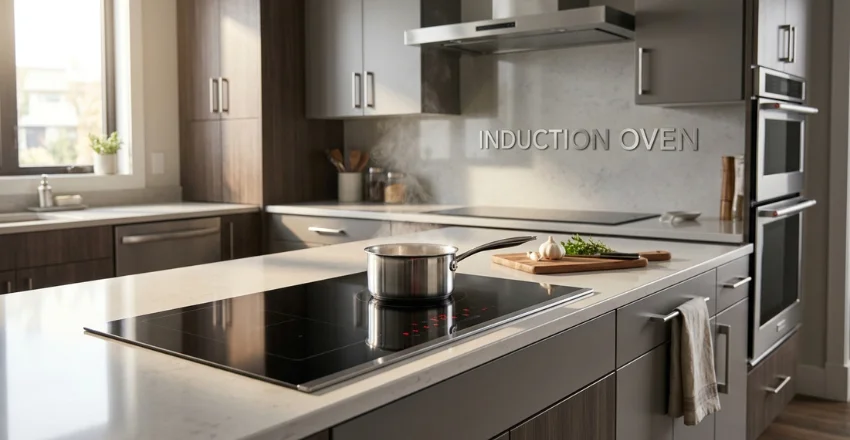
An induction oven usually means an induction range with an electric oven beneath its induction cooktop. The cooktop uses electromagnetic energy to heat compatible cookware directly. The oven itself normally uses standard electric heating elements, often combined with convection.
This distinction matters when you’re comparing appliances for a U.S. kitchen. Induction can provide fast response and precise cooktop control without an open flame. Yet baking, roasting, and broiling still happen inside an electric oven cavity.
Induction Range at a Glance
| Feature | What to Know |
|---|---|
| Cooktop heating | Electromagnetic induction |
| Oven heating | Electric resistance elements |
| Convection | Available on many models |
| Cookware | Magnetic cookware required on cooktop |
| Surface | Smooth glass-ceramic cooktop |
| Main advantage | Fast, responsive stovetop heating |
| Main limitation | Some cookware may need replacement |
| Installation | Electrical requirements depend on the model |
Key Takeaways
- Induction describes the cooktop technology, not usually the oven cavity.
- Magnetic cookware, including many cast-iron and stainless-steel pans, works with induction.
- Convection and induction aren’t competing versions of the same technology.
- An induction range can include a convection oven.
- Check electrical requirements before replacing a gas or older electric range.
- Confirm appliance dimensions before finalizing cabinets or counters.
What Is an Induction Oven?
An induction oven is commonly understood as a range combining an induction cooking surface with an electric oven. Copper coils beneath the glass cooktop create an electromagnetic field. Compatible cookware responds to that field and becomes the heat source.
The oven below works differently from the cooktop. Electric elements heat the oven cavity for baking, roasting, or broiling. A fan may circulate hot air when the appliance includes a convection setting.
That design explains why induction and convection can appear on the same appliance. Induction controls how pots and pans heat on the surface. Convection controls how heated air moves around food inside the oven.
How Does Induction Cooking Work?
An induction cooktop creates a changing magnetic field beneath its smooth surface. Magnetic cookware placed above the coil interacts with that field. The cookware heats quickly while the surrounding surface receives much less direct heat.
This direct response is one reason induction feels different from radiant electric cooking. A traditional electric element must heat itself before transferring heat through the cooktop. Induction sends energy directly into suitable cookware instead.
The response also works when reducing heat. Lowering the power changes the energy reaching the pan quickly. That control can help with simmering sauces, boiling water, or moving between cooking temperatures.
Induction vs. Convection: What Is the Difference?

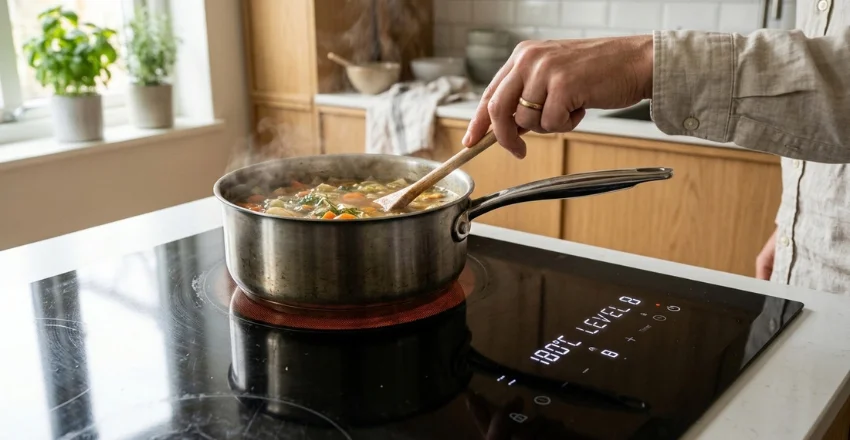
Induction and convection perform different jobs, despite their similar appliance terminology. Induction concerns the cooking surface and cookware. Convection concerns airflow inside an oven.
| Feature | Induction | Convection |
|---|---|---|
| Primary location | Cooktop | Oven cavity |
| How it works | Electromagnetic energy heats cookware | Fan circulates heated air |
| Requires special cookware | Yes | No |
| Main purpose | Fast, responsive stovetop cooking | More consistent oven heat circulation |
| Can both exist together? | Yes | Yes |
A range can therefore have an induction cooktop and a convection oven. You don’t necessarily need to choose one technology over the other. Many shoppers are instead deciding between an induction range and a conventional electric or gas range.
Benefits of Choosing an Induction Range
Speed is one of induction’s most noticeable advantages. Energy goes directly into compatible cookware rather than first heating a burner. That design also responds quickly when you change power levels.
The smooth surface can simplify routine cleanup. Food around the pan is less likely to encounter a glowing heating element. Spills still need cleaning, but the flat surface has no traditional burner grates.
Induction also eliminates an open cooking flame. The glass can still become hot from contact with heated cookware. Homeowners should therefore treat the surface as hot after cooking despite the technology’s different heating method.
Precise control is another useful benefit. Power changes take effect quickly when you raise or lower the setting. Cooks moving from gas often value that responsiveness when comparing electric alternatives.
What Are the Drawbacks?
Cookware compatibility is the first issue to check. Induction requires cookware that responds to a magnetic field. Some aluminum, copper, glass, and ceramic cookware won’t work unless they contain an induction-compatible magnetic layer.
Cost can also influence the decision. Appliance prices vary widely by brand, size, oven capacity, and added features. Installation costs can rise when an older kitchen needs electrical changes.
Induction cooktops may also make operational sounds. Cooling fans and cookware can produce humming, buzzing, or clicking during certain settings. Noise levels vary by appliance and pan construction.
Finally, the oven doesn’t automatically gain induction’s cooktop speed. The oven cavity remains an electric oven on standard induction ranges. Its preheating and baking performance depend on the oven’s design and features.
How to Check Whether Your Cookware Works
A simple magnet test can identify many compatible pots and pans. Place a household magnet against the bottom of the cookware. A firm magnetic attraction generally indicates that the pan can work on induction.
Cast iron is normally compatible because iron responds to the magnetic field. Many stainless-steel pans also work, although stainless construction varies. Product markings can provide a clearer answer when magnetic attraction seems weak.
Don’t assume every metal pan will work. Pure aluminum and copper aren’t normally induction compatible without a magnetic base. Check cookware before replacing a range so you can include possible pan costs in your budget.
Electrical and Installation Considerations
A full-size induction range is a significant electrical appliance. Circuit, voltage, and amperage requirements vary by manufacturer and model. Always follow the specifications listed for the appliance you plan to install.
This becomes especially important when replacing a gas range. Your existing kitchen may not have the electrical connection required by the new appliance. A qualified electrician can determine whether circuit or panel work is necessary.
Appliance dimensions matter too. Measure the opening, depth, nearby counters, and required clearances before ordering. Homeowners planning broader changes can review Home Votel’s kitchen-remodel guidance before locking in appliance locations.
Electrical planning should happen before finished surfaces are installed. Moving circuits after cabinets, backsplashes, or counters are finished creates avoidable work. Confirming specifications early can protect both the schedule and renovation budget.
Induction Range vs. Gas and Radiant Electric
Each cooking method creates a different daily experience. Gas gives you a visible flame and familiar burner control. Radiant electric uses heated elements beneath a smooth surface, while induction heats compatible cookware electromagnetically.
| Factor | Induction | Radiant Electric | Gas |
|---|---|---|---|
| Cooktop response | Fast | Slower | Fast |
| Open flame | No | No | Yes |
| Special cookware | Required | Not usually | Not usually |
| Smooth surface | Usually | Usually | Usually no |
| Heat source | Electromagnetic field | Electric element | Gas flame |
| Oven type in a range | Electric | Electric | Gas or dual-fuel |
The right choice depends on your existing utilities and cooking habits. Your cookware collection can also change the total cost of switching. Compare the complete installation rather than focusing only on the appliance price.
Features Worth Comparing Before You Buy
Start with oven capacity and cooktop layout. Check whether your common pans fit comfortably across the available cooking zones. Then compare rack positions and usable oven space against the dishes you cook most often.
Convection can be valuable for households that roast and bake regularly. Some models also offer air-fry modes, temperature probes, warming settings, or connected controls. Treat those additions as optional features, not reasons to ignore basic cooking performance.
Controls deserve attention as well. Touch panels create a clean appearance, but their layouts differ considerably. When possible, try controls in person and check whether common settings are easy to reach.
Cleaning features can affect long-term ownership. Smooth cooktops are relatively straightforward to wipe, while oven interiors still require regular care. Home Votel’s oven-cleaning guide explains why removing grease and food residue should remain part of routine maintenance.
Is an Induction Range Right for Your Kitchen?
Induction makes sense for homeowners who want responsive electric cooking and a smooth cooktop. It can be especially attractive when avoiding an open flame is a priority. Compatible cookware and adequate electrical service remain important requirements.
A conventional electric range may be simpler when purchase price is the main concern. Gas may remain attractive to households that prefer flame-based cooking and already have suitable service. Local utility costs can also affect long-term operating expenses.
For a renovation, choose the appliance before finalizing cabinets and electrical plans. Home Votel’s home-appliance resources can help you consider appliance decisions alongside other household upgrades. Planning those details together reduces the chance of expensive changes later.
Frequently Asked Questions
Is an induction oven the same as a convection oven?
No, the terms describe different technologies. Induction heats compatible cookware through electromagnetic energy on the cooktop. Convection uses a fan to circulate heated air inside an oven.
Does an induction range have an electric oven?
Yes, standard induction ranges generally pair an induction cooktop with an electric oven. The oven may use conventional electric elements or include convection. Check the model specifications because features vary.
Do you need special pans for induction cooking?
You need cookware with a magnetic base. Cast iron and many stainless-steel pans are compatible. A magnet placed against the pan’s bottom provides a quick preliminary test.
Can you use cast iron on an induction cooktop?
Cast iron generally works well with induction because it is magnetic. Place heavy cookware carefully on a glass surface. Sliding rough cookware can increase the risk of scratches.
Does induction use less heat around the kitchen?
Induction transfers energy directly into compatible cookware instead of heating an exposed burner first. This can reduce wasted heat around the cooking surface. The oven still releases heat when baking or roasting.
Is switching from gas to induction difficult?
The appliance swap can require more than removing one range and installing another. A suitable electrical circuit must be available for the selected model. Have the electrical requirements checked before purchasing or scheduling installation.
Make the Decision Around Your Kitchen, Not the Label
The term “induction” tells you how the cooktop heats cookware. It doesn’t mean the entire appliance uses electromagnetic heating. Understanding that distinction makes comparing ranges much easier.
Before buying, check cookware compatibility, electrical requirements, dimensions, oven capacity, and convection features. Compare installation costs alongside the appliance price. Those checks give you a clearer picture of what the upgrade will require.
If you’re planning a larger kitchen project, select major appliances before finalizing cabinets and electrical work. That sequence helps prevent clearance problems and costly changes. It also keeps your cooking needs at the center of the renovation.