

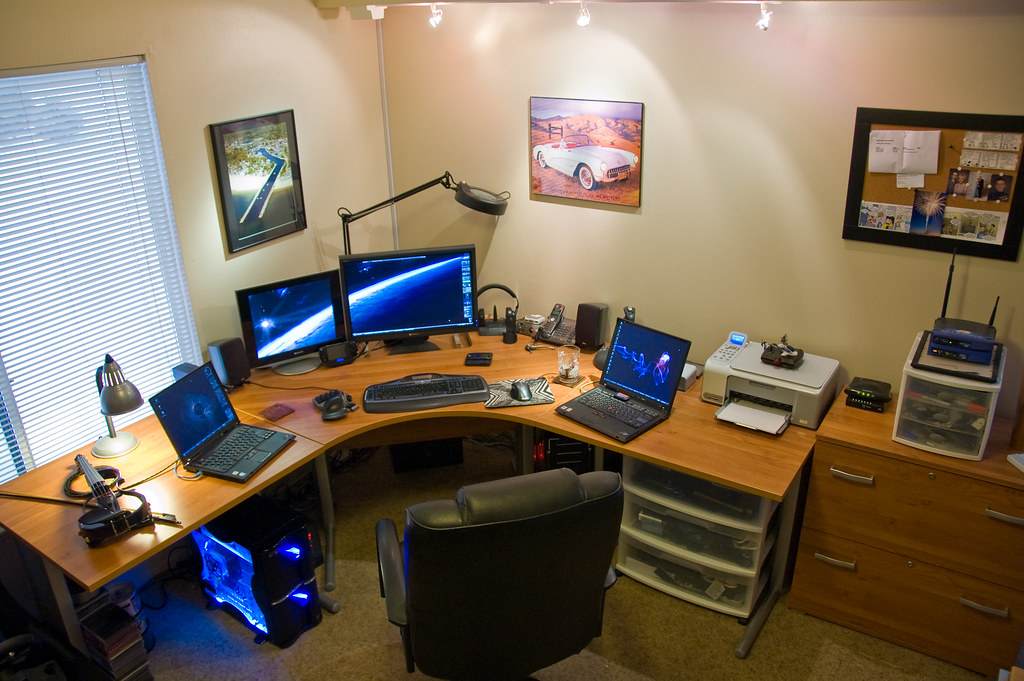
Your work environment significantly influences both your mood and productivity. Since you’ll spend most of your working hours in this space, optimizing it can have a profound impact on your efficiency and well-being. Although the idea of designing the perfect workspace might seem daunting, it’s actually a tremendous opportunity to enhance your remote work experience and create a sustainable business model.
Here’s how you can strategically design your home office to boost your productivity and foster a healthy, efficient remote work lifestyle.
1. Light
Lighting plays a crucial role in setting the ambiance and functionality of your workspace. Combining ambient lighting to establish mood with task lighting for visibility is essential for effective office work. Consider a layered lighting approach: use a desk lamp for focused tasks and update your room’s main fixture if necessary to ensure sufficient brightness and even light distribution.
Natural light is indispensable for maintaining high productivity and motivation throughout the day. Exposure to daylight can regulate your circadian rhythm and boost your energy levels. Ensure your workspace has access to sunlight and fresh air by positioning your desk near windows whenever possible.
However, admitting that your screens often serve as the main light sources is important. Screen light can strain your eyes and disrupt melatonin production, negatively impacting your sleep quality. To mitigate this, use apps that adjust the screen’s color temperature based on the time of day, thus protecting your eyes and sleep patterns adjusts the screen’s brightness.
2. Ergonomics
Comfort directly affects not only your health but also your productivity. Poor ergonomics often result in lower back pain and discomfort that can distract you from your work. Investing in a quality, adjustable chair and maintaining good posture is critical.
The height of your desk impacts the angle at which you view your screen and your typing posture. Proper alignment helps prevent eye strain and repetitive strain injuries. Ensure your elbows rest comfortably at a roughly 90-degree angle on the desk surface to reduce muscle fatigue.
Standing desks have become increasingly popular for promoting movement and reducing sedentary behavior. Using a combination of standing and sitting intervals—such as working for 20 minutes standing and resting for 10 minutes seated—can increase productivity and improve your overall health.
3. Sound
Acoustics are a key factor in minimizing sound distractions. Background noise can disrupt focus, especially when working from home with family or roommates. While asking others for quiet can help, it isn’t always feasible to expect complete silence.
Soundproofing your home office with acoustical panels can significantly reduce external noise and prevent work sounds from disturbing others. Additionally, optimizing room acoustics by addressing reverberations and echoes will enhance audio clarity if you conduct frequent calls or recordings how is an echo produced.
The most immediate and affordable solution is investing in a reliable noise-canceling headset. Combining headset use with soundproofing measures and open communication with cohabitants creates a robust, long-term sound management strategy:
- Communicate with friends and family
- Soundproof your home office
- Use a high-quality noise-canceling headset
4. Colors
Colors profoundly influence our mindset, motivation, and overall productivity. Understanding color psychology can help tailor your workspace to suit your work style.
For example, yellow is known to stimulate creativity, red boosts energy and assertiveness, and purple has calming properties. Your choice should align with your job role: sales professionals may thrive in red or orange environments, while writers and designers might benefit from yellow or green hues.
Feel free to experiment with complementary colors rather than sticking to a monochrome scheme. The key is balancing vibrancy and harmony to avoid visual distractions.
5. Clutter
A cluttered workspace can impair your coordination and focus by creating visual distractions. Studies suggest that even those who claim to work best in chaos tend to be less efficient in a messy environment.
Establishing a regular cleaning routine—ideally twice a week with brief sessions—helps maintain order. Ensuring sufficient storage and organizational options within your home office is essential for keeping clutter at bay enough storage.
Cable mess is a common contributor to workspace clutter. Implement effective cable management solutions such as cable ties and clips to organize wires neatly and prevent tangling.
Wrap Up
Regularly refreshing your home office can breathe new life into your workspace, keeping your environment dynamic and aligned with the latest ergonomic and productivity insights. Staying updated with emerging trends allows you to continuously optimize your setup for comfort, focus, and creativity. Remodeling your home office, even with minor adjustments, can motivate you and sustain long-term remote work success.
Additionally, integrating technology and smart devices—such as automated lighting, adjustable desks with memory presets, and smart speakers—can enhance your working environment. These tools not only improve efficiency but also add a layer of convenience and personalization, helping you maintain a comfortable, productive workspace that adapts to your needs throughout the workday.
Infographic provided by Shipping Container Rental Company, Container Alliance