


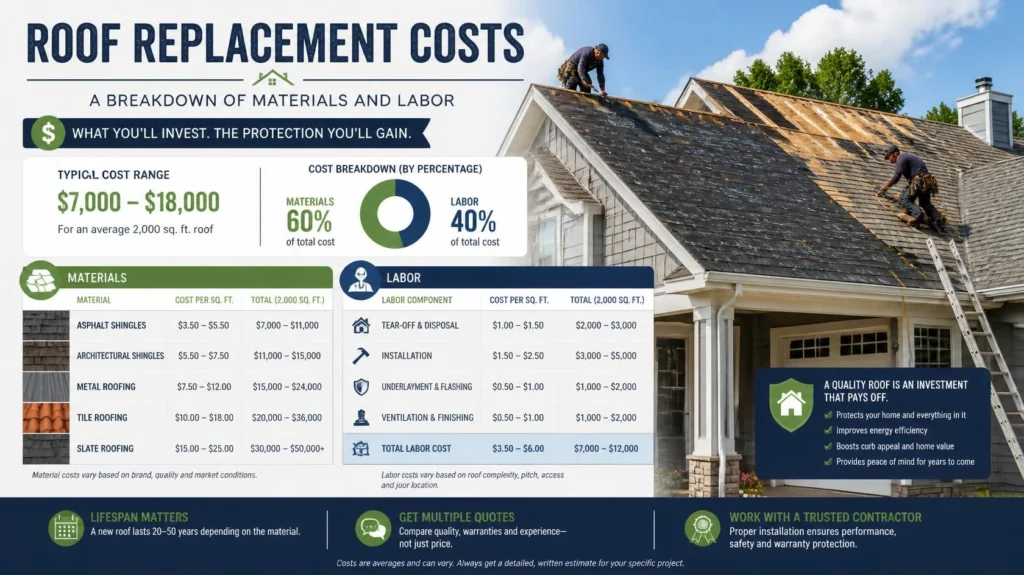
Planning for a new roof starts with a realistic budget. The roof replacement cost for a typical U.S. project currently lands near $10,000. Most standard jobs fall between about $7,500 and $14,000, although premium projects can cost much more.
Your final price depends on roof area, material, pitch, access, labor, and hidden repairs. A home’s living area isn’t the same as its roof surface area. That distinction can change an estimate by thousands of dollars.
In 2026, many U.S. homeowners should budget about $7,500 to $14,000 for a typical new roof. A national midpoint near $10,000 is a useful planning figure. Large roofs, steep designs, premium materials, or damaged decking can push the final bill well above that range.
| Key cost factor | 2026 planning figure |
| National average | About $10,000 |
| Common project range | $7,500–$14,000 |
| Installed cost per square foot | About $3.75–$11 |
| Labor share | Roughly 40% to 60% |
| Asphalt shingle project | Often $8,000–$16,000 |
| Premium materials | Can push totals above $30,000 |
These figures work best as planning benchmarks, not contractor quotes. Local wages, code requirements, roof design, and material grades can move pricing in either direction. Current national cost guides also use different project samples, which explains some variation between published averages.
Key Takeaways
- Budget around $10,000 as a starting point, then adjust for roof area and material.
- Measure actual roof surface instead of relying only on your home’s interior square footage.
- Compare itemized contractor bids because tear-off, decking, permits, and cleanup can change the total.
- Check insurance before authorizing storm-related work because normal aging usually isn’t covered.
Roof Replacement Cost by Roof Size

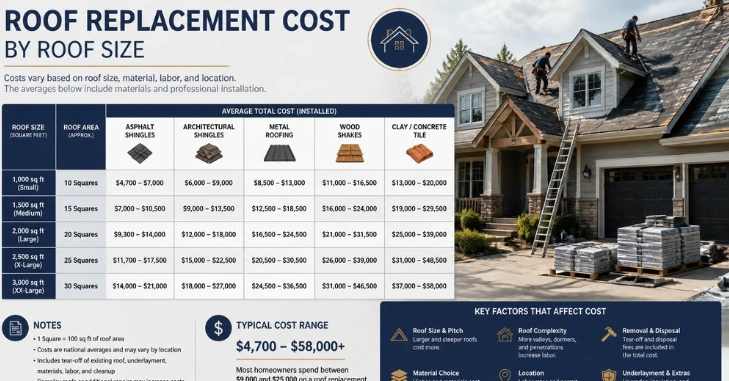
Roofers normally price projects using actual roofing area rather than heated living space. Fixr’s 2026 national data places typical installed pricing around $3.75 to $11 per square foot. Using that range provides a practical starting estimate for common roof sizes.
| Roof surface area | Estimated project range |
| 1,000 sq. ft. | $3,750–$11,000 |
| 1,500 sq. ft. | $5,625–$16,500 |
| 2,000 sq. ft. | $7,500–$22,000 |
| 2,500 sq. ft. | $9,375–$27,500 |
| 3,000 sq. ft. | $11,250–$33,000 |
Two 2,000-square-foot houses can have significantly different roofing areas. A single-story home may have more roof surface than a two-story house with similar living space. Pitch, garages, porches, overhangs, valleys, and dormers also change the measured area.
Ask each roofer to state the measured roof area in the estimate. Contractors may also quote work by the “square,” which equals 100 square feet. Knowing the measured quantity makes competing bids easier to compare.
How Roofing Material Changes the Price
Material selection can move your total more than almost any other decision. Basic asphalt usually sits toward the affordable end, while metal and natural materials cover much wider price bands. Installation method, product grade, and regional availability also affect the final Roof Replacement Cost.
| Roofing material | Approximate installed range per sq. ft. |
| Asphalt shingles | $4.50–$16 |
| Metal | $4–$40 |
| Cedar | $9–$14 |
| Concrete or clay | $10–$18 |
| Slate | $9–$30 |
The ranges are broad because material categories contain many different products. Standing-seam metal, for example, can cost far more than basic exposed-fastener systems. Slate and premium architectural products can also require more labor and structural planning.
Asphalt remains attractive for homeowners focused on lower upfront spending and broad installer availability. Higher-priced systems may appeal when durability, appearance, or local climate conditions matter more. HomeVotel also covers the advantages of replacing an aging roof beyond the initial purchase price.
Labor, Tear-Off, Permits, and Hidden Costs
Labor commonly accounts for about 40% to 60% of the project total: steep slopes, multiple roof planes, limited access, and detailed flashing increase crew time. Heavy roofing products can also require more difficult removal and installation.
Old roofing usually needs removal before the new system goes down. Modernize lists tear-off around $2 to $5 per square foot and permits around $250 to $500 nationally. Local fees can differ, and rotten decking may add another unplanned charge.
| Quote item | What the estimate should clarify |
| Tear-off | Number of layers removed and disposal included |
| Decking | Replacement price for damaged wood |
| Underlayment | Product type and included coverage |
| Flashing | Chimneys, valleys, walls, vents, and skylights |
| Ventilation | Ridge, soffit, or other ventilation work |
| Permits | Who obtains them and who pays |
| Cleanup | Dumpster, debris removal, and magnetic nail sweep |
| Warranty | Manufacturer and artistry coverage |
This line-item approach makes contractor quotes easier to compare. A low proposal may exclude work that another company includes from the start. Comparing complete scopes can reduce expensive change orders after the project begins.
Repair or Replace: Which Costs Less?
Repair costs much less when damage is isolated, and the existing system still has useful life. Fixr places average roof repair spending around $1,150, with many projects ranging from $400 to $1,900. Repeated leaks or widespread deterioration can make continued patching less attractive.
Age alone doesn’t automatically mean you need a new roof. Condition, leak history, decking health, and remaining material life matter more than one birthday. Modernize recommends considering replacement when problems become widespread, or the existing system approaches its expected service life.
Future improvements can also affect the timing decision. Homeowners planning solar should evaluate the existing roof before installing panels. HomeVotel’s solar design guide explains why you should review roof condition before installation.
Does Homeowners Insurance Pay for a New Roof?
Home insurance may help when a covered event suddenly damages the structure. Examples can include qualifying storm, fire, or falling-tree damage under the specific policy. Normal aging, wear, neglect, and routine maintenance generally aren’t covered causes.
Your settlement method can also affect the amount you receive. Replacement-cost coverage and actual-cash-value coverage calculate payouts differently, especially on older roofs. Your deductible and policy endorsements can further change your out-of-pocket amount.
Read your policy before approving major storm-related work. Ask the insurer whether the claim uses replacement cost or depreciated value. Get the coverage decision directly from your insurer rather than assuming a contractor’s estimate guarantees payment.
How to Lower Your New Roof Cost Without Cutting Corners
Reducing the bill starts with controlling scope, not choosing the cheapest contractor. Compare several bids using the same roofing material, underlayment, ventilation plan, and warranty level. Ask contractors to separate optional upgrades from work required to complete the installation properly.
| Cost-saving move | Why it helps |
| Compare several itemized bids | Exposes scope and pricing differences |
| Choose common stock products | May reduce special-order costs |
| Ask about scheduling flexibility | Gives the contractor more scheduling options |
| Confirm decking rates beforehand | Reduces surprise change-order pricing |
| Compare warranty terms | Helps reveal differences between similar bids |
| Review financing separately | Makes interest and fees easier to evaluate |
Don’t judge bids using the bottom-line number alone. Confirm licenses or required trade qualifications, insurance, materials, cleanup terms, and written warranties. HomeVotel’s roofing provider comparison guide shows useful questions for evaluating written proposals.
How to Compare Roofing Quotes Fairly
Contractors can produce different totals because their proposed work isn’t always identical. One bid may include new flashing while another expects to reuse existing components. Another company may include a decking allowance that makes its initial price appear higher.
| Comparison point | Question to ask |
| Measured size | How many roofing squares are included? |
| Product | What exact manufacturer and product line is quoted? |
| Old material | Is complete tear-off included? |
| Decking | What happens if they find rotten wood? |
| Flashing | What will be replaced rather than reused? |
| Ventilation | Does the proposal correct ventilation problems? |
| Disposal | Are dumpster and cleanup charges included? |
| Warranty | How long is artistry coverage? |
Request written answers whenever an estimate is unclear. That gives you a consistent record before signing the contract. It also makes later scope changes easier to identify and discuss.
When a Higher Quote Can Be Reasonable
A large number doesn’t automatically mean a contractor is overcharging. Large surface areas, steep pitches, multiple valleys, difficult access, premium products, and damaged decking can raise the total. Local building requirements can also increase labor or material needs.
A $30,000 project can fit within published national ranges for large or premium roofs. Fixr reports high-end projects reaching $60,000 with materials such as slate or copper. A similarly priced basic asphalt job deserves closer comparison unless the scope explains the difference.
Focus on what the quote buys rather than judging one number alone. An expensive proposal should clearly explain its material, labor, structural, and code-related costs; if it doesn’t, request clarification before signing.
Before You Sign a Roofing Contract
Start by confirming the measured roof area and the exact material you want installed. Then collect several itemized estimates using comparable scopes. Confirm decking rates, permits, disposal, flashing, ventilation, warranties, and payment terms before signing.
If storm damage caused the problem, review your insurance coverage before authorizing major work. Keep photographs, estimates, inspection findings, and insurer communications together. Clear documentation can make both contractor and insurance discussions easier.
A realistic budget gives you room to evaluate the full project instead of a single headline price. The goal isn’t simply finding the lowest bid. It’s choosing a complete, clearly documented scope with fewer costly surprises.
Frequently Asked Questions
What is the average roof replacement cost in 2026?
Current national guides place the typical average near $9,500 to $10,000. Fixr reports about $10,000, while Angi lists an average near $9,608. Local quotes can move significantly above or below those figures.
How much does it cost to replace a 2,000-square-foot roof?
A 2,000-square-foot roofing surface can cost roughly $7,500 to $22,000, based on Fixr’s published 2026 range. That estimate applies to roof area, not interior living space. Material choice and roof complexity can move the final figure.
How long does a roof replacement take?
A straightforward residential asphalt project may take only a few working days once installation begins. Larger or more complex projects may take longer. Weather, inspection schedules, and unexpected decking repairs can also extend completion.
Can you finance a new roof?
Homeowners may use contractor financing, personal loans, credit cards, or home-equity products. Each option carries different interest rates, fees, repayment periods, and qualification requirements. Compare the total borrowing cost before choosing a payment method.